The realities of human trafficking are often much more complex than they appear on the surface. While it is defined by force, fraud, or coercion, the pathways into exploitation and the ways control is maintained can take many forms.
One of the devastating layers of control and coercion traffickers use can be substance use. Addiction is when a person is psychologically or physically dependent on drugs, other substances, activities, or behaviors, and substance abuse is a repeated pattern of compulsive substance use that leads to adverse consequences.
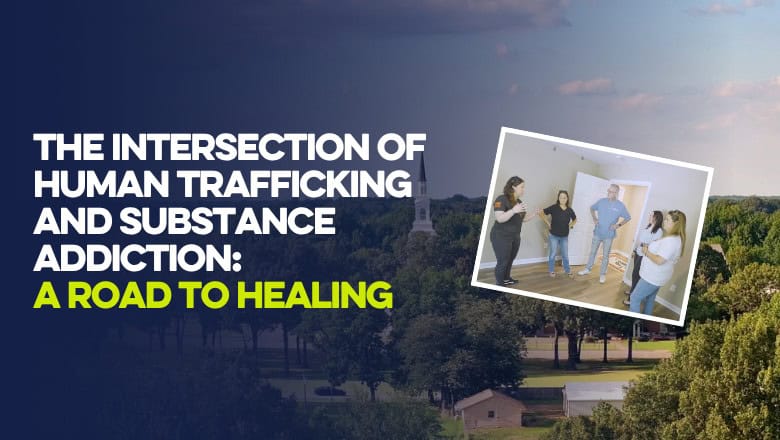
In the world of exploitation, addiction, substance abuse, and trafficking often collide. The intersection of human trafficking and substance use demands survivor-centered care to address both trauma and addiction, both together and apart to support long-term recovery and healing.
In fact, according to the United States Office to Monitor and Combat Trafficking in Persons, “the role of substance use disorder in human trafficking is powerful and pervasive; addiction can increase a person’s vulnerability to being trafficked, can be initiated and manipulated by the trafficker as a means of coercion and control.”
Not all trafficking cases reflect this intersection, but it does show one of many ways coercion can take shape.
“Human trafficking is not this cloak-and-dagger scenario people imagine,” said Ben Owen, Co-Founder of We Fight Monsters, a Memphis-based nonprofit working with people impacted by addiction, homelessness, and human trafficking. “It happens to people who are already vulnerable. If traffickers have a tool of coercion, they can traffic somebody because that individual needs a fix—the opioids, the drugs, or whatever else they may be addicted to.”
Where Trafficking and Substance Abuse Intersect
The relationship between addiction and trafficking isn’t always clear. It can be quite complex. Not every person who is trafficked experiences substance use, and substance use alone does not lead to trafficking. But research and experience reported by experts in-the-field consistently show that human trafficking and substance abuse can be deeply intertwined.
These intersections generally appear in three ways:
- Pre-existing vulnerability: Individuals who struggle with substance addiction or substance abuse may be targeted by traffickers who exploit that vulnerability. In some cases, predators manipulate survival behaviors which are linked to addiction as a means to coerce individuals into exploitation, including sex trafficking.
Childhood trauma often plays a critical role in shaping vulnerability for individuals, influencing both substance use and the conditions that traffickers exploit.
“Childhood trauma often comes first, and it can lead to addiction, which then creates another layer of vulnerability to trafficking,” said Ben. “Addiction doesn’t discriminate, but in trafficking it’s easier to see the patterns that put people at a higher degree of risk.”
- Control through dependency: One method of coercion that traffickers may capitalize on is substance use, where drugs are introduced or leveraged to create dependency and to maintain control over a vulnerable individual. Once a person becomes dependent on a substance, withdrawal from that substance becomes a powerful tool to keep individuals from leaving the exploitative situation. Dependency gives the trafficker immense power.
A study published in Anti-Trafficking Review found that traffickers actively use substances not only to recruit victims but to maintain control during exploitation, including inducing euphoria, rewarding compliance, and leveraging withdrawal as a form of coercion.
“Survivors facing substance use don’t want to be addicts,” said Sonny Von Cleveland, a nationally recognized advocate, author, and speaker with lived experience now serving as Director of Public Engagement and Content at Our Rescue. “For many, they’re just so afraid of feeling empty because to them, emptiness is the worst feeling in the world.”
- Coping with trauma: Survivors of childhood abuse or trafficking-related trauma may turn to drug use or other forms of substances as a coping mechanism. Over time, this can evolve into a substance use disorder, making the healing process more complex.
Clinical research, including findings referenced by institutions like the National Institute on Drug Abuse, explain how trauma can significantly increase the likelihood of substance use and addiction. Survivors may use substances to manage anxiety, numb emotional pain, or cope with memories of exploitation.
Without integrated care, this coping mechanism can become a vicious cycle and yet another barrier to the healing process and future stability
Jackie Goldstein, Our Rescue Vice President of Global Survivor Care explained, “Regardless of how someone enters that cycle, if addiction is present and left unaddressed, it increases a person’s vulnerability, especially their risk of being re-exploited.”
For survivor care to be most effective, it is imperative that professionals who work in the fields of public health and anti-trafficking work together to address these links. Partnership between responders can dramatically improve the outcomes for survivor care.
Why Integrated Care Matters
Research published in Pub Med, a peer reviewed medical journal and indexed in the National Institutes of Health database found that the intersection of human trafficking and substance use affects how we view and treat survivors. It reported that “the co-occurrence of sex trafficking victimization and [substance use disorders] creates challenges for the identification of victims… and the criminal justice response.” Too often, systems treat survivors as offenders, arresting them for drug related activity or survival behaviors tied to their exploitation without recognizing the source of the problem, or the reason for the substance abuse.
Awareness and understanding of the intersection between substance abuse and human trafficking is important. When people have a full understanding of the individual’s history of trauma, they are equipped to respond in ways that support recovery and help protect the survivor going forward.
Today, traditional models of care often separate trauma care services from treatments for addiction. This is unfortunate because, for survivors of human trafficking who turn to substance use as a coping mechanism, that division creates a missing link to the importance of the healing and recovery journey.
Essentially, the survivor benefits most from a trauma-informed response that takes into account their history and not just their addiction. A survivor navigating both trauma and substance is not fully supported if only one need is addressed. Integrated, trauma-informed, and addiction-informed care recognizes that:
- Trauma and substance use are often intertwined
- The healing process must address trauma and substance use together
- Long-term stability depends on treating the whole person—not isolated symptoms.
Leaders who are involved in operational efforts connected to survivor care programming, like the recent Sparrow House project, emphasize that healing is not linear. It requires time, trust, and access to resources that address the full scope of a survivor’s experience.
Healing is possible; lives can be rebuilt with time, safety, and care.
“It brings me hope seeing survivors accomplish something for the first time after beginning recovery,” said Jess Owen, Co-Founder of We Fight Monsters. “Something that might seem small to others, like making a meal for their child, opening a bank account, or completing detox, represents for survivors real progress and a new sense of possibility.”
Moving Forward: A Call for Awareness and Understanding
Therefore, addressing the intersection of addiction and trafficking requires awareness, understanding, and action.
It means supporting programs and organizations that recognize the full complexity of survivor care and recovery. It means investing in models that integrate trauma and substance use treatment to assist survivors.
At Our Rescue, our focus is on strengthening efforts that meet survivors where they are and supporting initiatives like Sparrow House, to provide safe, stable environments for survivors where recovery can begin and families can stay together, to provide safe, stable environments for survivors where recovery can begin and families can stay together.
Our work is grounded in the belief that survivors’ voices must lead the way. Their lived experience shapes how programs are built, how services are delivered, and how systems can better respond to the realities of exploitation and recovery. By elevating those perspectives and investing in survivor-informed initiatives, the goal is to support more effective, compassionate, and sustainable pathways forward.
If you believe in long-term recovery, healing, and survivor-centered care, please Join the Fight today. Your donation helps expand survivor access to safe housing, trauma-informed recovery resources, and programs that help make healing possible.