By Jim Cole, Senior Advisor for Cyber Strategy and Child Protection, Our Rescue
Published in recognition of National Police Week, May 2026
People ask me, “How do you do it?”
Not my law enforcement colleagues. They already know the answer, or they have their own version of it. The question comes from friends and family, from people at dinner parties who learn that I spent my career working cases of child sexual abuse. They tend to go quiet for a moment before asking. It comes from the general public, from people who care and simply cannot imagine how anyone could do this work, day after day, for decades.
My answer is always the same: “How can I not?”
I carry what I call the burden of knowledge. Once you know what is happening to children in the digital shadows, once you have seen it, built systems to find it, worked cases that span continents, you cannot unknow it. That knowledge does not feel like a weight to set down. It feels like a responsibility you pick up every morning.
When I am asked that question, my mind goes immediately to the people and moments that answer it for me. I think of the successes, the rescues, the identifications, the children found. I think of the survivors who are still in my life today. They are the real heroes in this story: men and women who live with the reality of childhood sexual abuse and get up every single day and work to overcome it. I think of the advocates who give so much of themselves to walk alongside survivors on that journey.
I think of the Victim Identification Specialists who hold a particular place in my heart. These are professionals who pour themselves into the worst that humanity has to offer, watching and listening to horrific abuse, frame by frame, because somewhere in that material is a child who can still be found. I think of the Online Undercover Investigators who, in my view, carry the hardest assignment of all. They must inhabit the mindset of the very evil they are fighting, becoming something they are not in order to protect children they may never meet.
And most of all, I think of this: if they didn’t do it, if they stepped back because the work is hard and painful and costs something real, then who would stand in the gap? Underfunded. Under-resourced. Under-appreciated. Fighting a desperate fight, often with one hand tied behind their back. These are men and women who are, in every sense of the word, giving themselves to impact the life of a stranger they may never know.
They are heroes. Full stop.
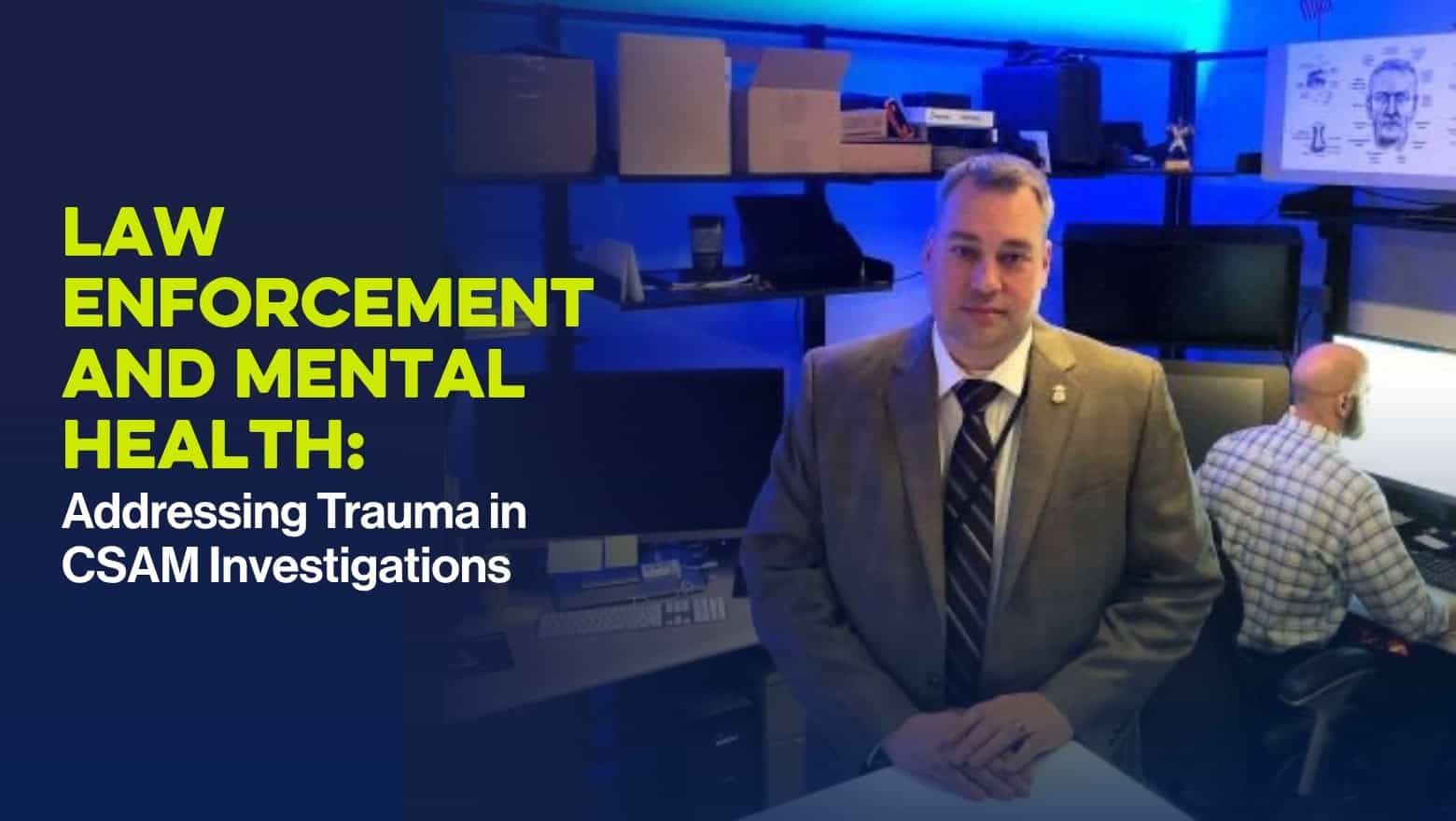
I spent more than three decades in law enforcement, twenty of them as a federal agent. I founded the Victim Identification Program and Laboratory at the Homeland Security Investigations Cyber Crimes Center from the ground up, building it from nothing into a program that became a model for victim-centered digital investigations. I served as Chair of the INTERPOL Specialists Group on Crimes Against Children, working cases around the globe and developing a perspective on this fight that crosses every border and language. That career gave me an unshakeable understanding of who these investigators are and what they carry.
National Police Week is a time to honor those who serve, including those who gave their lives in the line of duty. It is also a moment to speak honestly about a burden that leaves no visible scar: the psychological weight carried by ICAC investigators, analysts, specialists, and other law enforcement teams that fight this fight every day, here and around the globe.
Established in 1962 by President Kennedy, National Police Week is a time to honor law enforcement officers who have died in the line of duty, while also recognizing the service and sacrifice of those who continue to serve and the toll that work can take on them and their families.
In the context of child exploitation cases, it’s also a moment to acknowledge the often unseen mental and emotional impact carried by investigators, analysts, and frontline officers who confront this work every day.
The children in these cases are the primary victims, always. The perpetrators who created and distributed that material are the source of every harm. But keeping this mission alive over years and decades requires us to speak honestly about what it costs the officers who stand in that gap on those children’s behalf.
What Officers Carry into Every Shift
Investigating internet crimes against children is not like most police work. Officers are not arriving at a scene after the fact and moving on. They are immersed, for hours, days, months and years, in the digital world where the abuse occurred. They review evidence that no human being should ever have to see. They do it methodically, carefully, and often alone in a room, because the work demands precision.
The research confirms what many in the field have long known. A 2024 study published in Communications Psychology (Woodhams & Duran) found that analytical staff in criminal justice roles who are repeatedly exposed to traumatic material, including child sexual abuse content, show significantly elevated rates of PTSD and secondary traumatic stress. A separate qualitative study published the same year, titled “Once You See It You Can’t Unsee It,” documented how law enforcement immersed in CSAM investigations experience trauma that goes beyond traditional secondary or vicarious categorizations. Officers describe intrusive imagery, difficulty sleeping, emotional numbing, and a gradual erosion of the line between work and the rest of life. These are not signs of weakness. They are the predictable result of sustained exposure to traumatic material that would overwhelm anyone.
The silence makes it harder.
The culture in many police departments has historically discouraged officers from disclosing mental health struggles. Seeking help has sometimes been viewed as a liability rather than a sign of professionalism. Officers learn to compartmentalize. They build walls. Over time, those walls exact a cost.
I have seen gifted investigators leave the field before they were ready because they had no adequate support. I have watched colleagues quietly absorb years of exposure without any structured mental health care, until the weight became too great. The loss to those individuals, to their families, and to the mission of protecting children is real and it is measurable.
The Work Behind the Work: ICAC Task Forces
Internet Crimes Against Children Task Forces are among the most important structures in American public safety. These multi-jurisdictional networks bring together local, state, and federal law enforcement agencies to coordinate investigations, share intelligence, and pursue those who produce and distribute child sexual abuse material online.
The officers assigned to ICAC work are some of the most technically skilled investigators in the criminal justice system. They build expertise in digital forensics, covert online operations, and victim identification over the years. Keeping them in the field, effective and healthy, is not just a human resources concern. It is a public safety issue and a victim-centered imperative.
Every experienced investigator who leaves the field due to untreated trauma takes thousands of hours of specialized knowledge with them. Every identification that never happens because an understaffed or burned-out unit couldn’t complete the work represents a child who remains unidentified, whose abuse continues unreported and unaddressed.
Supporting officer mental health is not a secondary concern. It is directly tied to the mission of protecting children.
Breaking the Silence: What’s Changing
The conversation around law enforcement and mental health is shifting. Police departments and agencies across the country are developing dedicated behavioral health programs, peer support networks, and embedded mental health professionals. Some agencies have implemented mandatory psychological check-ins for officers in high-exposure assignments. The stigma around seeking help is not gone, but it is weakening, particularly among younger officers.
Officer wellness is not a benefit. It is an essential need as part of the foundation that keeps investigations running and outcomes improving. Departments that invest in mental health training and mental health services for their officers report better retention, fewer critical incidents, and more consistent performance over time.
Peer-to-peer programs have proven particularly effective in ICAC environments. Officers who have navigated the demands of this work and come through it are talking honestly with colleagues who are earlier in their careers. Those conversations do not require clinical credentials. They require trust, shared experience, and the knowledge that someone else has been in the same place.
The data on where the gaps are is stark. A 2022 study in Frontiers in Psychiatry (Mitchell et al.) surveyed commanders from 54 ICAC Task Forces and 155 affiliated agency investigators. Only 62% of respondents said their agency had an officer wellness program at all. Nearly half identified more wellness resources as a high priority. Stigma around help-seeking was the most widely acknowledged barrier. A U.S. Department of Justice report on wellness challenges for law enforcement personnel found that a 2019 ICAC commander survey showed overwhelming support for mandatory wellness programs, including one-on-one sessions with mental health providers, yet implementation remained inconsistent across agencies. Officers who receive timely mental health care following exposure to traumatic material show significantly better long-term outcomes than those who delay or avoid treatment. Early access to a mental health professional, structured debriefs after difficult assignments, and regular psychological monitoring are not soft programs. They are tools that work.
Where Our Rescue Stands
Our Rescue’s work has always been built on partnership with law enforcement. We are not out front. That is not our role. We stand alongside the officers and agents doing this work, providing support, training, and resources that make investigations more effective and more sustainable.
Through ICAC Connect, Our Rescue maintains a direct connection to the men and women working internet crimes against children, offering tools, training, and community that strengthen both their capabilities and their resilience. We hear from law enforcement officers regularly about what they need, what is missing, and what would help them keep going.
What we hear, consistently, is that the mental health piece remains an area of genuine need. Officers want access to mental health services that actually understand their work, providers who do not need the full backstory on what it means to investigate Child Sexual Abuse Material (CSAM), who understand secondary traumatic stress in this specific context, and who can offer support without judgment.
That gap is one Our Rescue is committed to helping close. Not by replacing the expertise of mental health professionals, but by connecting law enforcement with the right resources, advocating for behavioral health investment in the agencies doing this work, and keeping this conversation alive.
What You Can Do
Most people will never see inside a CSAM investigation. They will not sit in the rooms where officers process evidence or understand the technical and emotional weight of building a victim identification case piece by piece. That distance is appropriate. This is specialized, sensitive law enforcement work.
But distance does not mean indifference. What happens in those rooms, the identifications made, the victims found, the offenders brought to justice, depends on officers who are capable, supported, and able to sustain the work over the long haul. Whether that happens depends on whether the systems around them treat mental health as the real and urgent priority it is.
This National Police Week, I am asking you to consider what it actually means to support the officers on the front lines of child exploitation investigations. Not with words alone, but with the kind of resources and advocacy that translate into real change. Our Rescue’s ICAC Connect program is one direct way to do that.
The Work Continues
My career has been oriented around one purpose: finding children who have been victimized and bringing justice to those who harmed them. That has never changed. But I have also seen, up close, what this work demands. The mission is only sustainable when the people doing it are genuinely supported.
The children whose images appear in these investigations deserve investigators who can stay in the fight, who have the mental wellness and institutional support to keep working until every identification is made. The officers who carry that burden deserve a system that takes their mental health as seriously as their training.
So, when someone asks me how I do it, and my mind goes to all of those people, what I feel is not burden. What I feel is gratitude. Gratitude for every investigator who chose to stand in the gap. Gratitude for every survivor who chose to keep fighting. And a deep, ongoing obligation to make sure the people doing this work are never left to carry it alone.
—
Support the officers on the frontlines. Donate to ICAC Connect today at ourrescue.org/icac-connect
—
Related Reading
• What Is ICAC? Internet Crimes Against Children Task Forces Fighting Online Exploitation
• Children at Risk: A Sharp Rise in 2025 Reports of Online Exploitation
• A Dog Trained to Protect Children Also Saved My Own Life
• An Audacious Goal: The Future of ICAC Task Forces
• ICAC Connect – Support Law Enforcement
—
References
Woodhams, J., & Duran, F. (2024). A model for secondary traumatic stress following workplace exposure to traumatic material in analytical staff. Communications Psychology, 2, 13. https://doi.org/10.1038/s44271-024-00060-1
Slane, A., Martin, L., Rimer, Z., et al. (2024). “Once You See It You Can’t Unsee It”: Law enforcement trauma and immersion in child sexual abuse material. Child Abuse & Neglect Reports. https://www.sciencedirect.com/science/article/pii/S2950193824000858
Mitchell, K. J., et al. (2022). Practices and policies around wellness: Insights from the Internet Crimes Against Children Task Force Network. Frontiers in Psychiatry, 13, 931268. https://doi.org/10.3389/fpsyt.2022.931268
U.S. Department of Justice. (2023). Wellness challenges for law enforcement personnel. https://www.justice.gov/d9/2023-06/wellness_challenges_for_law_enforcement_personnel_2.pdf
—
About the Author

Jim Cole is a retired federal law enforcement agent with more than 30 years of experience, including 20 years as a federal agent specializing in child exploitation and digital forensics. He founded the Victim Identification Program and Laboratory at the HSI Cyber Crimes Center and served as Chair of the INTERPOL Specialists Group on Crimes Against Children. He currently serves as Senior Advisor for Cyber Strategy and Child Protection at Our Rescue.