Human trafficking does not always look the way we expect.
It does not only happen in distant countries, across borders, or through dramatic kidnappings. According to the US Department of Justice, it can happen in big cities, small towns, rural communities, and online. It can even begin with a message, a relationship, a promise of stability, or a moment of trust. And it is often hiding within the everyday circumstances people are least likely to question.
That is why understanding the realities of human trafficking and child exploitation matters.
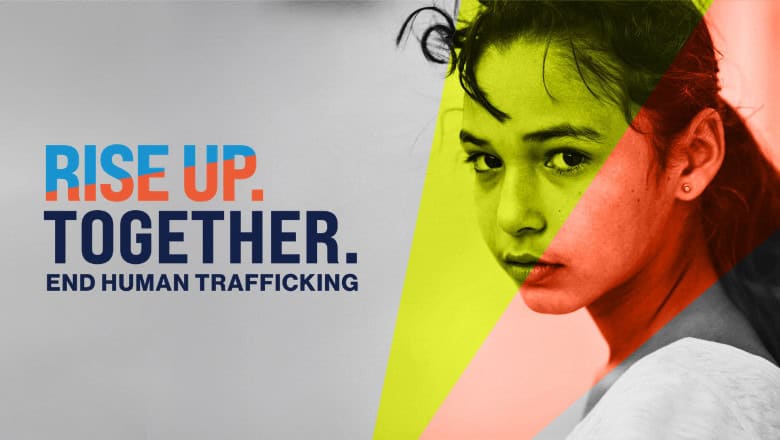
In recognition of World Day Against Trafficking in Persons 2026, Our Rescue presents Rise Up Together, a five-part docuseries that moves beyond common misconceptions to examine what Human Trafficking looks like today.
Observed annually on July 30, World Day Against Trafficking in Persons was established by the United Nations to raise awareness about human trafficking and promote and protect the rights of those affected by it. It is both a moment of recognition and a global call to action.
Through the voices of survivors, law enforcement professionals, advocates, prevention experts and members of the Our Rescue team, the Rise Up series explores five essential parts of the fight:
- Understanding the reality of human trafficking
- Supporting survivors beyond the moment of rescue
- Equipping and caring for frontline protectors
- Preventing exploitation before it begins
- Recognizing the role each of us can play
Because no one person, organization, community or country can end human trafficking alone.
Episode #1 Rise Up for Freedom: Understanding the Reality
Rise Up for Freedom reframes human trafficking as a crisis that is often hiding in plain sight. It challenges common misconceptions, defines the issue, and shows why true freedom requires more than rescue, but also requires survivor care, law enforcement support, prevention, and community action.
Human trafficking is the exploitation of another person for labor or commercial sex through force, fraud or coercion. When a minor is involved in commercial sex, proof of force, fraud or coercion is not required.
Yet many still only picture trafficking as a stranger kidnapping someone and holding that person against their will. While those cases can occur, exploitation is often far more difficult to recognize.
As Tarrant County Sergeant Tarik Muslimovic explains in the series, human trafficking “exists in our backyard.” Recognizing this reality is the first step toward changing it.
Watch: What Human Trafficking Can Look Like Today
Watch the full Rise Up for Freedom episode on YouTube.
Episode #2 Rise Up for Survivors: Rescue Is Only the Beginning
Rise Up for Survivors centers on human trafficking victims and survivors, from the vulnerabilities that traffickers exploit to the moment of rescue and the journey from crisis to healing. Through survivor voices and expert insight, it shows why trauma-informed, survivor-centered care is essential to helping survivors rebuild safety, stability, choice, and hope.
It is important to note that removing someone from an unsafe situation is critical, but it is not the end of a survivor’s journey. As June Haskell, Trafficking Survivor and Survivor Care Program Manager at Our Rescue, explains: “Just because you are no longer physically unsafe doesn’t mean that you feel safe here.”
After identification or rescue comes new and often overwhelming questions: Where will I go? Who can I trust? How will I support myself? What happens next?
That is why survivor care must be trauma-informed, survivor-centered, and responsive to each person’s individual circumstances.
Our Rescue works with partners to help bridge the distance between immediate crisis response and long-term stability. The goal is not to make decisions for survivors, but to help provide the resources, opportunities, and support that allow survivors to reclaim their lives on their own terms.
Watch: Why Rescue Is Only the Beginning
Watch the full Rise Up For Survivors episode on YouTube.
Episode #3 Rise Up for Protectors: Supporting the Front Lines
Rise Up for Protectors honors the law enforcement officers and frontline partners confronting human trafficking and child exploitation every day. It shows the growing complexity of this growing crime, the emotional toll on investigators, and why equipping and supporting protectors is critical to helping more human trafficking survivors on their healing journey.
Because, behind every investigation is a child, a family, or a survivor.
And behind every case are investigators and frontline professionals confronting some of the most difficult material imaginable.
“I see crime trends rising and I see challenges coming our way. One thing that’s often an issue for a lot of agencies and smaller units is personnel,” said Tarik Muslimovic, Sergeant Human Exploitation and Trafficking Unit in Tarrant County. “Not having enough bodies in those seats to work some of these cases.”
Law enforcement agencies are working to address complex trafficking, child exploitation and technology-facilitated crimes, often with limited personnel, funding and resources.
“Everybody wants to think that, you know, this stuff doesn’t happen in our town or our city,” said Pete Deats, Detective & ESD K9 Handler in the Kenosha, WI Police Department. “But they need to know. There’s a ton.”
Our Rescue helps enable law enforcement partners by providing specialized training, technology, digital forensic resources, electronic-storage-detection K9s and other critical support. This work extends across North America, Latin America, Europe, and Asia and is tailored to the needs identified by partners in each region.
When investigators have the training, tools, technology and support they need, they are better positioned to identify victims, pursue offenders, and build stronger cases. Supporting the wellbeing of the people doing this work is also essential to sustaining the fight.
Watch: The Protectors Need Protecting, Too
Watch the full Rise Up For Protectors episode on YouTube
Episode #4 Rise Up for Prevention: Recognizing Warning Signs and Vulnerability
Rise Up for Prevention focuses on what prevention requires. To separate reality from perception, we help the community recognize what human trafficking and exploitation can look like today.
Exploitation often begins with something that appears ordinary: a direct message, an online game, a photo or a conversation with someone offering attention, affection or understanding. Grooming is deliberate and relationship based. It can happen online or offline and may gradually introduce secrecy, shame, manipulation, threats, or control.
This means the safety messages many adults learned as children are no longer enough. Prevention cannot focus only on “stranger danger.” Children also need help understanding unhealthy behavior within familiar and trusted relationships.
Parents, caregivers, educators and other trusted adults can help by:
- Learning how grooming and online exploitation occur
- Creating open, age-appropriate conversations about online behavior
- Helping children recognize manipulation and unsafe requests
- Responding calmly when a child discloses a mistake or uncomfortable interaction
- Reinforcing that a child can ask for help without fear of shame or punishment
Human trafficking, online exploitation and sextortion are not interchangeable crimes. But they can share tactics that exploit vulnerability, including secrecy, manipulation, threats and shame.
“We cannot arrest our way out of Human Trafficking, so an informed and engaged community is the best line of defense,” said Our Rescue CEO Derek Benner.
Prevention begins when we understand those tactics, recognize warning signs, and create environments in which children feel safe coming forward.
Watch: Prevention Begins With Understanding
Watch the full Rise Up For Prevention episode on YouTube.
Episode # 5 Rise Up Together: Every Person Has a Role
The final episode of the series brings these themes together through the story of Sonny Von Cleveland, Director of Content and Public Engagement at Our Rescue.
Sonny experienced sexual abuse, exploitation, poverty, and instability beginning in early childhood. His unaddressed trauma contributed to years of anger, incarceration, and harm. But his story did not end there.
Today, Sonny uses his voice and lived experience to advocate for children, support survivors, and help others understand the lifelong consequences that can follow when trauma goes unseen and untreated.
His story is not shared to invite pity. It is shared to remind us that behind the labels placed on a struggling or “troubled” child, there may be trauma that no one has recognized.
There may be a child waiting for someone to notice.
Watch: Together, We Can Change What Happens Next
Watch the full Rise Up Together episode on YouTube.
We Rise Up Together
No single organization can end human trafficking and child exploitation alone.
It takes survivors, law enforcement, survivor care professionals, healthcare providers, educators, families, advocates, community partners, and supporters working together.
At Our Rescue, we Rise Up by helping equip law enforcement, supporting survivor care, and strengthening prevention and education initiatives. But lasting change requires people everywhere to choose not to look away and instead, choose to RISE UP.
Your support helps provide critical resources for the fight against human trafficking and child exploitation.
Frequently Asked Questions
Q: What is the theme of World Day Against Trafficking in Persons 2026?
A: Each year the United Nations Office on Drugs and Crime (UNODC) sets a focus for the July 30 World Day, and the 2026 theme is “Trapped behind the scam.” It draws attention to a fast-growing form of human trafficking in which people are lured by fake job offers, moved into locked compounds, and forced to run online fraud, such as romance and cryptocurrency scams, under debt, surveillance, and threats. It reframes trafficking not only as something done to victims, but as criminal activities
Q: How many reports of Human Trafficking is there?
A: The UNODC’s most recent Global Report on Trafficking in Persons found “detected victims rose 25% in a single reporting period, with detected child victims up 31%. Children now make up roughly 38% of all identified victims, and women and girls continue to represent a large share of those trafficked for sexual exploitation.” These figures reflect only the individual reports filed. Some experts believe the true total is believed to reach into the millions.
Q: What challenges do law enforcement agencies face in these cases?
A: The US Department of Justice’s National Institute of Justice states that human trafficking crimes are inherently complex and identifies barriers including victim identification, victims’ fear of seeking help and a lack of appropriate agency resources. Specifically, some agencies report having limited personnel, specialized training, and resources to manage these complex cases effectively.
Q: The series talks about methods control techniques in Human Trafficking. What do “force, fraud and coercion” mean in human trafficking?
A: Force may include physical violence or restraint. Fraud involves deception, such as a false job offer or promise. Coercion includes threats, blackmail or manipulation used to control another person.