
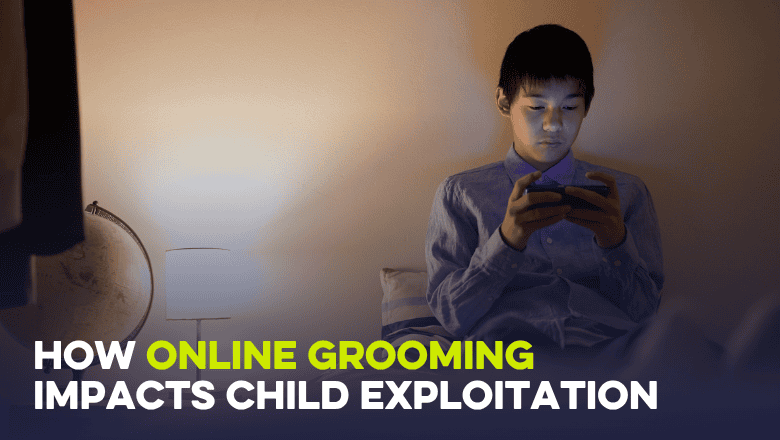
The digital age has transformed childhood, bringing unprecedented opportunities for learning, creativity, and connection. However, this same technology has created new pathways for predators to exploit vulnerable children. Online grooming has emerged as an easy gateway for child sexual exploitation, with devastating consequences that extend far beyond the digital realm.
The Staggering Reality of Online Grooming
Online grooming is a sophisticated form of manipulation where predators deliberately build relationships with children online to leverage their vulnerabilities and prepare them for sexual exploitation or even sex trafficking initiation.
Over 456,000 online enticement reports flooded authorities in 2024 alone, representing a crisis that demands immediate attention from parents, educators, and communities.
The scope of this threat extends to nearly every young person with internet access, creating a global crisis that demands immediate attention. In 2024, the U.S. Department of State confirmed that traffickers systematically exploit the internet to identify and groom children.
The alarming reality is that 40% of children online have been approached by someone attempting to “befriend and manipulate” them, while reports of online enticement skyrocketed by 300% between 2021-2023. Many of these crimes cross international borders, requiring a coordinated approach between law enforcement agencies worldwide to effectively track down predators who exploit jurisdictional gaps to evade capture.
These statistics reveal the disturbing reality of how online predators systematically target children across social media platforms, gaming environments, and messaging apps where digital interactions flourish unchecked.
Our Rescue’s Field Operations team directly addresses this crisis by responding to government requests and providing intelligence, digital forensics, and specialized training to support law enforcement in identifying these predators. In 2024 alone, Our Rescue supported 195 operations that resulted in 1,969 arrests and helped rescue 1,052 survivors from exploitation.
The Rapid Escalation from Online Contact to Real-World Harm
What makes online grooming particularly dangerous is how quickly it can progress from digital interaction to real-life exploitation.
Groomers systematically work to isolate children from their support networks, encouraging secrecy about their online activity and relationship. They may tell children that parents or other trusted adults “wouldn’t understand” their special connection, or they might threaten consequences if the child reveals their communication through any app or online platform.
The introduction of sexual language and explicit images often occurs gradually, with predators testing boundaries and normalizing inappropriate sexual conversation.
Studies indicate that 1 in 7 minors are asked for sexual images by strangers online on a daily or weekly basis, demonstrating how common these requests have become across various social media platforms.
Once groomers obtain compromising sexual images or personal information, they frequently employ sextortion tactics to maintain control. Children who initially shared content voluntarily find themselves trapped in cycles of abuse, with predators threatening to share material with family, friends, or schoolmates unless they comply with increasingly demanding requests for sexual purposes.
The statistics surrounding this exploitation are alarming: according to Our Rescue’s comprehensive sextortion guide, 12% of 9-12-year-olds and 31% of 13-17-year-olds agree it’s normal for kids their age to share nudes, while 1 in 7 kids aged 9-17 report they have actually shared such images. Perhaps most concerning, 46% of minors who shared their own intimate content did so with someone they met online.
Common sextortion scenarios include teens in online chat rooms befriending criminals who pretend to be romantic interests and request intimate pictures, which are then used as blackmail for additional content. Ex-partners may threaten to publish explicit images to manipulate them back into relationships, and increasingly, perpetrators create graphic AI-generated images using real people’s faces, threatening social media distribution unless payment is made. These scenarios can unfold in an hour or less and have tragically led some children and teens to take their own lives.
According to Derek Benner, Our Rescue CEO and former Department of Homeland Security official , these are not isolated incidents but rather the work of “ruthless criminal organizations that have existed for years” and are “cyber criminals that typically operate in regions worldwide that pose challenges for law enforcement.” These groups evolved into sextortion during COVID-19, taking advantage of increased online activity among children who were spending more time on devices while parents adjusted to new at-home roles.
Our Rescue’s International Cyber Program supports global law enforcement through technical training, case mentoring, and AI-enabled forensic software to combat this rapid escalation. The program includes specialized training for investigators and prosecutors, capacity building, cross-border collaboration, and technical guidance for cyber investigations that track predators across digital platforms.
How Online Groomers Operate in Digital Spaces
Understanding grooming behavior helps parents and trusted adults recognize when a young person faces potential sexual abuse. Online groomers follow predictable patterns that begin with seemingly innocent contact and gradually escalate toward child sexual exploitation through sophisticated grooming behaviour.
The grooming process typically unfolds through several calculated stages.
Stage 1: Sexual predators first identify vulnerable targets, often focusing on children who display signs of loneliness, family problems, or low self-esteem.
Stage 2: They gain access through popular platforms where children spend time, including social media platforms like TikTok, Instagram, and Snapchat, as well as gaming environments and messaging apps.
Individuals seeking to abuse children in these environments are able to lock them into high-risk grooming conversations in as little as 19 seconds after the first message, with an average time of just 45 minutes.
Stage 3: Once contact is established, groomers work to build trust and emotional connections. They present themselves as understanding friends who share the child’s interests and concerns. Research shows that 1 in 3 young people consider friends they make online among their closest confidants, making children particularly susceptible to manipulation from adults who exploit this trust through calculated sexual communication.
Online predators often create fake profiles to appear more appealing to their targets. They may pose as teenagers or young adults, using stolen photos and fabricated personal information to build credibility. This deception allows them to engage in sexual conversation and gradually introduce sexual content into conversations, often requesting explicit images as part of their grooming tactics.
Our Rescue’s unique approach integrates support and resources for law enforcement during rescue efforts while providing survivor care at scale. This critical differentiator amplifies impact by ensuring that when predators are identified through open-source intelligence and strategic field operations, survivors receive immediate, trauma-informed support.
Vulnerable Populations and Targeting Patterns
Online predators don’t target children randomly. Research reveals specific demographic patterns in how groomers select one child from another onliner. Girls aged 13-17, LGBTQ+ children, and children with mental or physical disabilities face higher rates of targeting, as sexual predators exploit vulnerabilities and social isolation to facilitate child abuse.
Children experiencing family instability, peer rejection, or academic struggles become particularly susceptible to grooming tactics. Online predators actively offer the attention and validation these children crave while gradually introducing sexual content and requests for personal information.
According to research on LGBTQ+ child trafficking, up to 40% of homeless youth identify as LGBTQ+, with 26% of LGBTQ+ adolescents being rejected by their families, creating the isolation and desperation that traffickers exploit. Our Rescue’s analysis of racial disparities in human trafficking reveals that 40% of all sex trafficking survivors are Black, while Native American women represent 40% of reported sex trafficking survivors in South Dakota despite being only 8% of the population. According to examination of homelessness and trafficking, 68% of youth trafficked for sex were homeless at the time, and research shows that 1 in 3 homeless teens are lured into sex work within 48 hours of leaving home.
Our Rescue works with partners and communities around the globe to provide essential services to people who have been or could be sex trafficked and exploited. From prevention to intervention, Our Rescue is there when needed, developing relationships with law enforcement agencies to identify how we can bridge gaps and enhance their efforts in protecting these vulnerable populations.
Platform-Specific Risks and Safety Challenges
Different online platforms present unique risks for child sexual exploitation. Social media platforms like Instagram, TikTok, and Snapchat offer direct messaging capabilities that groomers use to initiate private conversations and share sexual content. Gaming environments provide immersive spaces where predators can build relationships over extended periods while engaging in shared activities that mask their true sexual purposes. According to research, teen girls favor TikTok, Instagram, and Snapchat, while boys prefer Twitch, Reddit, and YouTube, making these platforms prime hunting grounds for the estimated 500,000-750,000 predators who are online daily. High-risk messaging apps including Discord, Signal, Google Hangouts, GroupMe, WhatsApp, Kik, Viber, and WeChat provide encrypted communication which makes monitoring difficult, while some dating apps like Tinder, Bumble, Yubo, Kasual, Grindr, and Hinge expose teens to adult predators. Perhaps most concerning are secret vault apps that disguise themselves as innocent tools like Calculator, Keepsafe Vault, and Private Photo Vault, allowing children to hide inappropriate content and communications from parents.All platforms pose a level of risk to minors. Educating children on appropriate use is advised.
To protect your children from these digital dangers and learn how to identify warning signs across different platforms, explore Our Rescue’s comprehensive guide to dangerous online apps and the specific risks they pose to kids.
Our Rescue assists law enforcement with open-source intelligence, strategy, and field operations to track predators across these various platforms. We provide evidence and legal support to help prosecute offenders who exploit children through digital channels, working to ensure that platform-specific risks don’t become safe havens for exploitation.
Each platform presents different challenges for maintaining online safety while preserving children’s digital freedom. The Online Safety Act aims to increase platform accountability, but implementation requires ongoing vigilance from parents, educators, and safe adults who monitor children’s online activity across multiple social media platforms.
Recognizing Warning Signs and Grooming Behavior
Learning to recognize the warning signs that indicate a child may be experiencing online grooming or sexual exploitation is critical to prevent potential crimes. Changes in online activity patterns, secretive behavior around devices, and reluctance to discuss online friendships can all signal potential problems.
Children who receive unexpected gifts, money, or privileges may be targets of groomers who use these tactics to build trust and create feelings of obligation. Adults who ask children to keep secrets about their communication, request personal information, or gradually introduce sexual language into conversations display classic grooming behaviour that requires immediate intervention. According to research on AI detection of online grooming tactics, predators use specific strategies including trust development through compliments, self-disclosure of negative emotions to appear vulnerable, mental isolation from family and support networks, physical isolation questions about supervision, sexual desensitization, and compliance testing through reverse psychology.
Our Rescue provides educational resources to raise awareness about how to protect children from sex trafficking and child exploitation. As change agents, our goal is to help everyone understand, fight, and prevent these crimes online and within their homes, workplaces, and communities around the world.
The presence of explicit images on a child’s device, evidence of sexual conversation in messaging apps, or signs that a child has been engaging in sexual communication with adults online all indicate serious exploitation that demands immediate response from law enforcement To help identify all 11 key sex trafficking red flags in youth and learn specific steps for helping a child who may be experiencing trafficking, visit Our Rescue’s comprehensive guide to recognizing warning signs and contact the National Human Trafficking Hotline at 1-888-373-7888 if you suspect a child is being exploited.
Join the Fight Against Child Exploitation
The statistics are more than just data points—they represent real children whose lives have been forever changed by online predators and sexual exploitation. Every young person deserves to grow up in safety, free from the threat of manipulation, abuse, and sexual exploitation.
Our Rescue stands at the forefront of combating these crimes with a clear mission: to end sex trafficking and child exploitation while empowering survivors to reclaim their lives and thrive on their healing journey. Through comprehensive programs addressing prevention, survivor support, and policy advocacy, Our Rescue works tirelessly to create a world where children can grow up free from exploitation across every platform and in real life.
Donate today and join thousands of others committed to ending child exploitation and supporting survivors on their journey toward healing and hope. Together, we can create digital spaces where children can learn, play, and connect safely, while holding predators accountable for their crimes against our most vulnerable community members.