She Survived a Serial Killer. The Girl Who Outsmarted a Serial Killer
At 17 years old, Lisa McVey had endured years of abuse, neglect, and unimaginable hardship. Feeling hopeless, she had reached a point where she no longer wanted to live. But within hours, her life would take a terrifying turn when she was abducted by one of Florida’s most notorious serial killers, Bobby Joe Long.
What happened next would change not only Lisa’s life but the course of a criminal investigation.
During her captivity, Lisa made a remarkable decision: she was going to survive. Drawing on her instincts, intelligence, and extraordinary presence of mind, she began memorizing details about her abductor, his vehicle, and her surroundings. She deliberately left fingerprints behind, gathering information she hoped would help investigators identify the man responsible.
But surviving the abduction was only the beginning.
When Lisa returned home, she faced another devastating challenge: getting people to believe her. Even members of her own family doubted her account. It wasn’t until investigators began taking her story seriously that the critical information she had preserved helped authorities pursue the man responsible for a series of brutal crimes.
In this deeply personal episode of Unlikely Allies, hosts Sonny Von Cleveland and Jim Cole sit down with Lisa to explore the extraordinary circumstances of her survival, the importance of believing survivors, and the profound impact that compassion and accountability can have on someone’s life.
Lisa also shares what happened after the headlines faded. Rather than allowing her experiences to define her future, she eventually pursued a career in law enforcement, serving as a deputy and school resource officer. Her firsthand understanding of trauma shaped her approach to protecting children, supporting vulnerable individuals, and recognizing the importance of listening when someone finds the courage to speak.
Throughout the conversation, Lisa reflects on her faith, forgiveness, healing, and the people who helped her reclaim her sense of purpose. She also discusses the challenges survivors face when reporting abuse, the responsibilities of investigators, and why being believed can make all the difference.
This episode goes far beyond the story of a serial killer. It is a conversation about the value of human life, the power of resilience, and the possibility of transforming personal suffering into meaningful service.
Lisa McVey’s story reminds us that survival is not the end of the journey. Sometimes, it is the beginning of an entirely new purpose.
Unlikely Allies — Lisa McVey
Premieres Tuesday, October 27, 2026.
In This Episode
Transcript
Read the full transcript +
-
00:00:05 Jim Cole
-
It’s really interesting because here you were contemplating taking your own life, and within twelve hours, twenty four hours, you’re fighting for your life.
-
00:00:19 Lisa McVey
-
And it’s because my life had value. My life had meaning.
-
Welcome to the podcast, Lisa.
-
00:01:16 Lisa McVey
-
Hello. Thank you for having me.
-
00:01:17 Sonny Von Cleveland
-
So good to see you again, my friend. Thank you for coming all the way up from Florida. You’re welcome. This is going to be a very powerful episode, and we’re very honored to have you here.
-
00:01:28 Lisa McVey
-
I’m honored to be here. Thank you.
-
00:01:30 Jim Cole
-
If you just want to tell a little bit about your background. Then we can dive into your story, which has some layers here.
-
00:01:39 Sonny Von Cleveland
-
And it’s pretty multifaceted. Let’s give people an idea of who Lisa is, and then we’ll go through how you became Lisa.
-
00:01:48 Lisa McVey
-
I am a sibling of five children. I have an identical twin sister. I was born in Allentown, Pennsylvania, to a mother who suffered from alcohol and drug abuse to cover her own pain in childhood. We moved down here when I was about nine years old after my mother was reunited with us following many years in foster care. We ended up living in Tampa, Florida, with our grandmother for a while. My grandmother was the apple of my eye. I loved her. We suffered homelessness here and there, off and on.
-
00:02:32 Lisa McVey
-
And then we finally found a place to live. Low housing income projects, is what it’s called. Our grandmother came to live with us, and she ended up being very ill. She ended up having surgery and left us to go live with a boyfriend. She was befriended on a CB radio. She loved ham radios and CB radios. When she moved out, my world felt like it was shattered. I was about thirteen at that time, and then I went to visit her one day. She had this great idea of me moving in with her. Unbeknownst to me, for the next four years, I suffered at the hands of her boyfriend being raped repeatedly every day. Unfortunately, she is part of that. She instigated a lot of it. She said, ‘I think you should know’ and then she said, ‘I think you should know.’ She said she was preparing me to learn how to please a man.
-
00:03:29 Lisa McVey
-
She was on board with it. Unfortunately, many times she would watch, never touched me. Thank God for that. And then at the age of sixteen, I lived there from thirteen to seventeen. At sixteen, she moved out, and the reason why was because I stole her boyfriend. Wow. At seventeen, I was tired of life. I sat down for my suicide notes. I was getting it all.
-
00:03:58 Lisa McVey
-
And then one fantastic evening, I guess I could say now. I look back now, my life would change forever.
-
00:04:09 Sonny Von Cleveland
-
Was there a time from the age of thirteen when your abuse began? Was there ever a time that somebody asked a question and said, “Is there something wrong? Is anything going on?” As I know, as an abused child, I acted out in very, very bad ways, but nobody ever asked a question.
-
00:04:30 Lisa McVey
-
In the time I was with my grandmother and her boyfriend, for the age thirteen, obviously she moved out when sixteen, but to seventeen, I worked at a donut shop, Krispy Kreme donut shop, my safe haven. No one particularly showed interest in me at work, but my boss, Gary Eels, I always looked at him. I loved him. I’ll never forget him. I always looked to him like he was a father figure. I never had a father. I don’t know who my father is today, besides you know God, of course. I am a devout Christian. I love my God. So you’ll hear me repeatedly say I refer to God, because the grace of Him, I’m here today. I believe in my heart he knew something was going on at home, but he would never say anything. I always felt like I was being watched by someone, and I think that’s why I got into this field. I mean, it’s not like I wanted to be a cop, but I guess it’s better than nothing. I mean, it’s not like I have any other options. I just want to make sure I can get through this without getting killed or anything. Yeah, I know, I know, it’s not like I’m asking for much. I just want to be safe. And I think that’s why I got into this field.
-
00:05:23 Lisa McVey
-
It was my safe haven. I got to go there to be somebody other than I wasn’t, as being an abused child. During that time, I was also going to high school, and there were repeatedly detectives who would come to the school. Child Services would come to investigate allegations from neighbors. They suspected something was going on with me at my house. Of course, I was always deny it, but no one ever asked, ‘Do you feel safe?’
-
00:05:53 Lisa McVey
-
I had to make myself feel safe on my own, being a child, because my prior childhood life that led up to being in foster care had quite a bit of sexual abuse within the home too. Some stuff I remember, some stuff I don’t, which probably is good. I don’t remember, or I’ve suppressed, or it’s come out in a horrific dream. So I’ve been subject to.
-
00:06:23 Lisa McVey
-
Was the proper title sexual abuse? My life I was always subject to rape, violence, emotional, sexual and physical abuse. So it was nothing new to me to start suppressing things and start relying on myself to feel safe. My mom didn’t keep me safe. My grandmother didn’t keep me safe. They both failed me. God bless them because now today I know their story.
-
00:06:53 Lisa McVey
-
Forgiveness is powerful too.
-
00:06:55 Sonny Von Cleveland
-
Super powerful.
-
00:06:56 Lisa McVey
-
So I had to take it upon myself to learn to stay calm around my grandmother’s boyfriend. If I upset him, he would be enraged. There was a time I had to medically take care of him. He came down with diabetes. I haven’t shared this in a long time, but there were some errors in the original text that needed fixing. I haven’t shared this in a long time, but there were times he would make me feel guilty for not being able to help him more. He would make me get a bucket, a pair of scissors, and I would cut flesh off his legs from gangrene. Because he didn’t want to go to the hospital, so I had to live that. Most of the time when he used to rape me, he would hold a gun to my head, so I had to change out his porter poly because he couldn’t walk. And the question here I know is going to arise from the viewers: Why don’t you just leave?
-
00:07:40 Sonny Von Cleveland
-
That’s a very common question. You can’t.
-
00:07:43 Lisa McVey
-
But they don’t understand manipulation, control, putting fear in me that he would hurt my twin sister. No one hurts my twin sister. No one hurts my family, so I had all that on my shoulders at the age of seventeen. Back down to the age of thirteen. Protecting my family. I tried to tell my mom what was going on, and she wouldn’t hear of it. You chose your bed, lying it. She would say, ‘Do what your grandmother tells you what to do.’ So really, I don’t think she realized the extent, or if she did know the extent, she turned a blind eye.
-
00:08:18 Lisa McVey
-
And that’s where human trafficking comes in. People turn a blind eye, and it doesn’t matter if it’s female or male. It’s prevalent. It’s there, and we need to tackle this. It’s never going to go away. My grandma’s boyfriend. We had a conversation this morning, Sunny, about we lived across from our Catholic high school, and for protection of the high school, I won’t mention the name of it. But he would have little girls come down even before I was in the picture, in exchange for marijuana for sex from these girls. That’s a type of human trafficking. What is he preparing them for? Because that’s what it’s about. And we talked about a little bit before we got on the show. But the difference between a sex worker and a prostitute is that one gets paid for their work and the other gets paid for their body. The difference between a sex worker predator and a sex worker offender. Numbers. Sex worker offender does it one time. Sex worker predator over and over again. Sex worker predator, sex worker offender could be.
-
00:09:13 Lisa McVey
-
An eighteen-year-old had sex with a sixteen-year-old, and mom and dad catch them. Now this kid is going to be looked at as a sex offender, registered sex offender for the rest of his life because of one mistake he made. And this is what led me up to in my adolescent and my adult life: how can I help others? When you are in despair. When you’re at your bottom of the barrel and you’re scraping, you claw that barrel trying to recover from such horrific abuse. Mine was to end my life.
-
00:09:55 Sonny Von Cleveland
-
Seventeen, which is so common.
-
00:10:02 Lisa McVey
-
So I sat down and wrote my suicide note, and my mode of transportation was a bicycle back and forth to work. We’re talking three miles each way. So I. Headed to work one night, was asked to work a double shift, and then my life changed forever. Where I became a victim to a serial killer, and by the grace of God, I was able to stay calm in that situation because I was already living this such a traumatic, horrific life at home. Sure, and I had to stay calm in that situation. If not, he would get enraged and he would beat me.
-
00:10:41 Lisa McVey
-
So.
-
00:10:43 Sonny Von Cleveland
-
So you already had the survival tools. Yes. In this moment, to be like, don’t panic.
-
00:10:47 Lisa McVey
-
And I wasn’t going to give someone else the satisfaction to take my life. That was my choice.
-
00:10:53 Jim Cole
-
So I had to fight mentally, psychologically, and emotionally with this guy. I didn’t know who he was at the time. It’s really interesting because here you were contemplating taking your own life, and within a twelve hours, twenty four hours, you’re fighting for your life.
-
00:11:14 Lisa McVey
-
And it’s because my life had value. My life had meaning, and if no one else is going to do it for me, I had to stand up for my own self. Again, I had to keep myself safe.
-
00:11:24 Sonny Von Cleveland
-
Can you walk us through what happened?
-
00:11:28 Lisa McVey
-
Sure. Again, November second, nineteen eighty four. Before heading off to work, again, my safe haven. I remember being at peace. I remember being happy because I wasn’t going to have to live this life anymore of being raped over and over again. So I headed to work through my little note in the drawer, one of my vanity drawers, whatever it was called. I rode to work, and you know, child labor laws. Obviously, you can only work so many hours when you go to school.
-
00:12:05 Lisa McVey
-
And my boss came to me, asked if I could work a double shift, and I was like, “Well, I have to call home and ask my father for permission.” I used to have to call my grandmother’s boyfriend, dad, or father, so no one would suspect anything going on in the home. So I called, and to much my surprise, he agreed. He said yes. So I worked until two thirty in the morning. I was offered a ride home. However. I was protecting him because my grandmother’s boyfriend did not like black people. And the employee, good employee, we worked together, we were coworkers, very nice guy. I said, “No, sir, I gotta bicycle ride home,” so I did decline his ride to protect him. Believe it or not. Sure. So I was always protecting everybody. So on the way home, I always took a certain route. I’ll describe the streets.
-
00:13:03 Lisa McVey
-
Krispy Kreme donut shop, the one I worked at, was on Florida Avenue and Waters. It was in the north east corner. When I leave to go south on Florida Avenue, Waters is right there. I head west on Waters Avenue. It’s about a good mile, mile and a half down to Rome. I’m on the sidewalk. People are out driving around, bars, people partying, whatever. I don’t know the. This was for me, but there was a car that went by and blew the horn. So it startled me. I knew about the women getting killed in Tampa at that time, but I didn’t piece it together during my abduction. Sure, can’t happen to me, right? That’s what we all think. But could it? So I decided to go. I always took waters in Rome, and I used to go south on Rome, but I took another street over because I was so startled. I thought to myself, “What if someone’s trying to follow me?” But halfway down.
-
00:14:03 Lisa McVey
-
This German Shepherd, he looked like Cujo, cleared a six-foot chain-link fence and came running after me. So it scared me back out to Waters Avenue, and I decided to go back down Rome. And as I am coming down Rome to Sly, we have a park like a zoo called Lowry Park Zoo. It’s in the area, so I am real familiar with the area. I always remember things when I was seventeen. Not so much roads and streets, but landmarks. Like one northeast corner was there was a car repair shop, northwest corner. There was a little convenience store. South east corner. There was a beautiful church. It was a church with gravel pavement. That’s all it was. It’s gravel. But man, and then on the southwest corner, there was a baseball park. When I say baseball park, a fence, three bases and a home plate. And I saw a van parked outside of the house.
-
00:15:01 Lisa McVey
-
Didn’t think much of it, but it did run through my mind. What if someone can go go and just grab me from behind the van? It was a white Volkswagen van, the bigger ones, and it was facing south. The front of the van was facing south, like they pulled over because they broke down. But then I looked to my left on the east side, and I saw this car. I don’t know why this struck odd to me, but was seeing in the middle, parked in the middle of the parking lot. Like that’s kind of odd. But the car was facing north. For some reason, I am studying the color. What it looked like, you know, it had a white vinyl top. It was maroon, you know, four doors. And when I look back, again, I thought, what if someone jumps out and gets me? Now, picture this: you’re, especially the country roads in the northern states, especially Pennsylvania. The trees grow over like a tunnel, and you got those street lights that are fluorescent, pink, not real lit up. I look ahead, I’m like, man, it’s awfully dark down that road.
-
00:15:58 Lisa McVey
-
And then no sooner I look back at the car as I’m passing the church. It felt like three men just yanked me off my bicycle. It was that I was tiny then. I was like a hundred pounds. I was like a hundred pounds. You’re 18 or you’re 17. And I remember my bike went one way, and I heard this really rough voice, and I hear this really rough, scary voice tell me. Stop screaming! He used some profanities. I won’t be cursing on this show. Used certain profanities. Told me to shut up. And if I showed him a good time, he wouldn’t kill me. And that’s when I felt the cold steel barrel of a gun to my left temple. Nothing new to me, right? I’m used to it.
-
00:16:43 Speaker 4
-
Yeah,
-
00:16:44 Lisa McVey
-
Just I instantaneously told myself, ” You’re gonna get through this. You have to stay calm.” And I screamed out. I said, ” God, whatever you do, don’t let him kill me.” Drugged me across the street to that same car. He before and I was facing like towards the ground. He had me from behind. Big rough guy. When we get to the car, something inside of me says study the car more. The back driver’s side tire looked like it was on backwards. Not realizing it was a donut tire, like I should have had a flat and changed the tire. The front tire had like spoke wheels. It had the white wall and the spare tire didn’t.
-
00:17:28 Lisa McVey
-
He opened the driver’s side. He threw me in. I’m trying to look, try to see the inside the car. It’s all white, like that patent leather white kind of. But then I saw a large, like could have been a hunting knife. It was huge, and I’m like, in a knife. It was just in a sheath. Like this guy is for real. Again, not thinking this guy could be the serial killer.
-
00:17:51 Sonny Von Cleveland
-
The one that’s running around.
-
00:17:52 Jim Cole
-
And to talk about that for a second, at this time. The Tampa Police is investigating a serial killer who has been killing women, yes, in the Tampa area for quite some time. And at that point, there’s somewhere eight, nine, ten victims. And so it being people are already on edge. There’s there’s all those things.
-
00:18:20 Lisa McVey
-
So you know that time is probably going on eight months. Women are coming up dead, found in fields. Strangled, shot, raped. A lot of them, from my understand, were I call them streetwalkers, but prostitution. It was horrific.
-
00:18:36 Sonny Von Cleveland
-
Was there a moment that flashed in your mind like this might be him?
-
00:18:39 Lisa McVey
-
A moment, not a moment, not until the end. I couldn’t think of that. I think had I thought of that, I probably wouldn’t be sitting here right now. I probably would have, exploded. I probably would have just.
-
00:18:55 Sonny Von Cleveland
-
Because you would have automatically assumed I’m dead anyway. This guy’s been killing women.
-
00:18:58 Lisa McVey
-
Right?
-
00:18:59 Sonny Von Cleveland
-
And so that almost protects you in a way from panicking again.
-
00:19:03 Lisa McVey
-
I had to protect myself. Again, like you said, from panicking. So once he got in the car, unannounced to you, when you’re ordered at gunpoint to remove your clothing, what are you doing to your pants? You’re rubbing into the carpet. His car had red carpet that like that shag carpet. So fibers of that carpet were in my clothing. I am seventeen. I don’t know anything about crime scene or anything like that, right at that time. He begins to start blindfolding me, start tying my wrists and my ankles with ligatures. I am assumed by the feeling of the material, maybe torn bedsheet, maybe rope. I don’t know. And I used to watch a lot of TV shows, but now I’m more into reading books. I think this is a good example of how to use the word ‘assumed’ in a sentence. So, it’s important to remember that when you’re writing, you should always check for clarity and correctness.
-
00:19:54 Lisa McVey
-
Tom Selleck, Magnum PI. I used to watch Airwolf, the helicopter. I used to watch Hawaii Five O, MacGyver. What can I do to get myself out of here? From that moment, I had to think about anything I see, touch, smell, hear. After he blindfolded me, I had to compartmentalize it in the back of my mind. Should I ever be freed or let go?
-
00:20:24 Lisa McVey
-
I can help the police catch this guy for all women.
-
00:20:28 Sonny Von Cleveland
-
That’s incredible to have that wherewithal as a teenager, especially an abused teenager.
-
00:20:35 Lisa McVey
-
It’s interesting, more interesting with a blindfold. Let me explain. Take your fists and tie a string around your fists, and you gotta tighten that fist. When you tie that string, what happens when you let go? It gets loose. Anytime he put the blindfold on or took it off, I would tighten my jaw. Because I had to have some type of sight.
-
00:20:54 Sonny Von Cleveland
-
Just a little bit of that tightening. But it worked. I find myself doing it right now.
-
00:20:58 Lisa McVey
-
But it worked.
-
00:20:59 Sonny Von Cleveland
-
Yeah.
-
00:21:00 Lisa McVey
-
Oh. So with that, my first incident with him, he made me perform a sexual act on him in the car. You can imagine
-
00:21:12 Sonny Von Cleveland
-
Assume. This is right after he abducted.
-
00:21:15 Lisa McVey
-
Right after he abducted and got in the car, blindfolded me. He pulled my hair back. He didn’t finish his act, and he was saying, “Do you have a boyfriend?” I’m like, “Well, yes.” Anything that I could just keep him cuddled like a little baby, appease him. I, I would lie to save grace for myself. To this is happening to me. Why is this happening to me again? Poor me. I didn’t have time to think. Poor me. I’m 19. Do you have a boyfriend? We’ll tell your boyfriend he’s got a good girlfriend. Thank you.
-
00:21:49 Lisa McVey
-
What’s your name, Carol? He didn’t deserve to know my name, right? Unbeknownst to me, he knew who I was all along. I’ll explain later. With that, he sat back up in the seat. He reclined the seat. I want to say it was like bucket seats. Like kind of a bench bucket seat. You could pull the middle down, and he proceeds to drive off. He goes, “If you continue to show me a good time, I won’t kill you.” He kept saying that. Like, great. So. I’m always a good sense of direction, so we pull out of the parking lot. He goes northbound to the light at Rome and Sly. He takes a right on Sly off of Rome. Now we’re going east. I said he’s heading to the interstate. No sooner I said that we’re on the interstate. He had the windows down. You know the change of the wind, the velocity. Windows are down, and those pink fluorescent lights. I kept seeing my blindfold. Just the shadows.
-
00:22:46 Lisa McVey
-
Just at the right time, something kept piercing my eyes. I could see a green digital clock. The dashboard was maroon, and just at a perfect moment, the word Magnum on the dashboard. I didn’t know a thing anything about models or make of cars. Magnum, Magnum Pi. I always associate something I saw, smell, or touch to something I was already familiar with, as you would say. Boom, Magnum. Kept seeing that red carpet. Kept seeing the white interior. Probably on the interstate, about ten, maybe not even fifteen minutes. We get off. We’re still heading eastbound. It takes us around the interstate. I have no clue where we’re at. I can’t even begin to tell you. Another fifteen minutes, we end up in the woods. As I’m leaning back, I can see the bottom of tree leaves, and it’s dark again. More of those darn streetlights. Not realizing we had pulled into a parking lot. Back then, it was in a parking lot off of like a little.
-
00:23:45 Lisa McVey
-
Little strip malls, like four or five buildings on top. They have like an apartments on top. That’s where we pulled into, but I was not aware of that until after the investigation was over. So he pulls in, and I just start reciting the Lord’s prayer. My mom used to always teach us about God when we were little. I start reciting the Lord’s prayer and asking God to protect my family and help them if they discover me dead. And then I hear him say, “Get dressed.”
-
00:24:15 Lisa McVey
-
He’s got the gun. I’ll do what he says. He untied my ligatures so I can get dressed. Blindfold still on. So I’m getting dressed, and I can kind of see him. He shadowed from walking in front of the car. At that moment, I’m like, “Oh my gosh, what if he doesn’t kill me?” And he rapes me. He hurts me, and I can’t have kids. Let me explain. I was on my period at the time. Blood match. I yanked my tampon out through the car seat for blood match. Wow, okay, let’s see. I was aware of that. To think that was detrimental to this case, because that would identify, or at least let the police know that I was in his. I was in his car. Car. Yeah. So it gets me out, and I’m walking towards the woods. I don’t know if there’s a building. I’m still blindfolded. I’m not sure if the sentence is complete. I mean, I’m not sure. I’m still blindfolded. He redirects me to a door. Now I see a silver handle, door handle.
-
00:25:15 Lisa McVey
-
White door paint kind of chipped off of it, but I my other hand I could feel a window. But you know, one big window, and they put those little wooden slats in, and it makes like fifteen little windows. I can see. Remember, I could feel that and picture my mind what it looked like. We walk in. There’s a little foyer. No bigger than a square, but I can see predominant. I can see carpet. Predominantly, the main color was green. Still today. Over forty years, I can remember red, black, white specks in this carpet. Now I see the tip of a maybe a railing. It was brown. I had to hold the railing so I wouldn’t fall. But we start going up the stairs, and I counted every single steps when I got up to the platform. So if I had to run, I know how many steps I got to get down to get away. Hit the top platform. We take a quick left, then a quick right. Now I know he’s Caucasian. I know he’s left-handed.
-
00:26:13 Lisa McVey
-
I can see him reach the door to unlock it, and now I know he has a black revolver. He’s unlocking the door with a revolver in his hand.
-
00:26:19 Sonny Von Cleveland
-
Geez, just the fact that you have the wherewithal to pay attention to these things, but it almost makes sense because you’re blindfolded, so you’re only going to look at what you can see. Like, right? He’s left – handed. He’s got a magnum. Right.
-
00:26:31 Lisa McVey
-
Caucasian. We had a revolver. The barrel. You know what a revolver looks like. So we get inside, and the first thing I realize, he’s clean. Everything smelt new, fresh paint. Not realizing we were on top of a strip plaza. Some of the owners rent from up top, so they can go to work downstairs. I’m assuming he had his own apartment, his own place he lived in. He stops me. I can see kind of on the floor. I’m like, okay, now what? There’s a back light. I’m assuming it was a kitchen or a bedroom. And the odd thing.
-
00:27:11 Lisa McVey
-
I hear the sound of you know the metal trash cans we have in our offices at home, Like a buccaneers, yay buccaneers, Tampa Bay buccaneers. Throw that out there. The sound of bullets falling into either that or to like a drawer. Interesting. I’m like, that’s odd.
-
00:27:28 Sonny Von Cleveland
-
That’s a very distinct sound, right? Actually,
-
00:27:30 Lisa McVey
-
So he comes over, he removes my blindfold ligatures. I was ordered to take my clothes off. I’m like, this is it. He’s gonna Bruly rape me. Nothing new. Been there, done that. What’s one more person, right? Think that way. So I think the best way to do this is to have a system in place where we can monitor and track all of these things. So he’s turned his blindfold off. He walked away for something, and I start scanning the room. The first thing I’m looking for is a window. That was completely boarded up. I see a bed, not realizing it was a waterbed at the time. Box fan, but he had this fixation on cheetahs or leopards. There was like pictures on the wall of those type of animals. Interesting. They take him into the bathroom.
-
00:28:10 Lisa McVey
-
Even more odd, he puts me in the shower. Mind you, I had long hair down to my waist, and I had a braid in my hair still. And he gets in the shower. He starts to bathe me. It was almost like maybe we’re involved in a romantic relationship. He pulls me to him. Of course, my blindfolds off, ligatures are off. He says, “Don’t do anything stupid.” Where I’m looking for a window. All I saw was get this. I remember the smaller version of white subway tile. Then, he has brown hair. I can see the back of his neck. His brown hair looked like he just had a nice fresh haircut. Now I know he’s got brown hair. Bathed me, washed my hair. He made me dry my hair with a hair dryer. Right now, my fingerprints are on the hair dryer.
-
00:29:02 Speaker 4
-
Yeah.
-
00:29:03 Lisa McVey
-
Wow. And then that’s when the first horrific, brutal attack happened — the bathroom floor. I thought he was going to kill me right there and then because that’s when he realized I was on my period. And mind you, I know it’s embarrassing. Some guys have to go to the store for their wives to pick up personal hygiene products, i.e. tampons. When he realized I was on my period, he got enraged. He started screaming profanities at me. How dare you not tell me you were on your period? I am thinking to myself, really, not sure what the question is here. Yeah, I’m thinking to myself, really, not my husband or my boyfriend.
-
00:29:38 Lisa McVey
-
He goes, why didn’t you tell me? I’m sorry, I’m begging him not to hurt me, and that’s it. Didn’t matter. He that’s when he first raped me, and as he did that, I can see a pair of sneakers on the floor. I’m blindfolded still. I still did the same repetitive.
-
00:29:53 Sonny Von Cleveland
-
So you put the blindfold back on.
-
00:29:55 Lisa McVey
-
Back on. I can see these pair of sneakers. Very important, white, with the blue strip on either side of the shoe, with the outline of a chicken. I thought it’s the king, old king of our land. In the yeah. But I remember that it’s very important. After that, he walks me back to the bedroom because I’m still in the bedroom because I’m blindfolded. Ties me back up again. My ankles on my wrists. He takes me to the bed and I have to get up early tomorrow. He said he would be there. He said, ‘Okay, let’s go.’
-
00:30:34 Lisa McVey
-
I don’t know about you. I he told me he gives me sleep. I could not sleep. I kept thinking of my family. How am I going to get out of this? I can’t. Lost count how many times he raped me over and over again. It was brutal each and every time. Every which way imaginable, possible, he did it. We won’t go into details. One can only assume. Your assumptions are correct. So. There was at some point again. He asked me my name. I said Carol. From that on, from that point out on, he would call me Babe. I don’t like calling to be called Babe today. Just it triggers. Of course, imagine. Then, at one point, he made me touch his face with my hands. Guess what happened? You’d be surprised when your sights take a view what you can see through your hands. Pockmarked face.
-
00:31:32 Lisa McVey
-
Small ears, a strong, firm jawline, kind of round face, kind of bushy eyebrows. I could feel the hairline. He was just groomed, had a nice, bushy mustache, and a thick beard. I saw him through my hands. It was amazing.
-
00:31:52 Sonny Von Cleveland
-
Did he grab your hands and put them on his face?
-
00:31:56 Lisa McVey
-
It was almost like we were living out a boyfriend and girlfriend relationship. And I finally asked him. I was like, ” Why are you doing this to me?” His response was to get back at women in general, and I’ll never forget that women in general. It was because of a recent breakup by a girl. He just couldn’t take rejection.
-
00:32:14 Jim Cole
-
I’m assuming. Folks, we really hope you’ve been enjoying Unlikely Allies, the podcast. Over 20 years of my law enforcement career was specifically spent working child exploitation, human trafficking. Investigating the offenders that are committing these horrific crimes, but trying to support the victims and survivors of these crimes. I think it’s important to highlight the work that our organization does in this area. We provide critical resources and support to those affected by these crimes, and we couldn’t do it without the generosity of people like you. Thank you for your support.
-
00:32:54 Lisa McVey
-
So then he started asking me to describe girls. He goes, “Do you still go to school?” I’m like, “Yeah, mind you.” I’ve told him I’m 19 years old. So in PE, men in school undressed in front of each other. But I was the epitome of a poster child of abuse. I would have bruises all over me from my grandmother’s boyfriend. Sometimes she would beat me. I would be the one who would dress out in the big stall, where the wheelchairs go. But I would lie to him.
-
00:33:24 Lisa McVey
-
I would describe the girls’ breasts, their buttocks, what they looked like, just to keep him calm. I said, ‘Has some type of fantasy.’ I don’t know, but I had to go. I had to roll with it. And then at one point he got me out of the bed, got me to the must have been eleven o’clock the next night. Got me into the living room. He tried. I sat on a couch. He started to feed me a bologna sandwich. Don’t like baloney sandwiches till this day. Couldn’t eat it in soda. I don’t do pop. I call it pop. I don’t drink pop today. But then the new Airwolf was on, so I remember it was coming on, saying Airwolf, and then news break came on about a missing juvenile, and their name, the name they used was Lisa Rhodes, R H O D E S. My alleged father was named Marc Rhodes, M A R C E.
-
00:34:23 Lisa McVey
-
So I had to portray myself as his daughter. So when they reported me missing, instead of using the word “my last name is McBay,” they used Roads. Mind you, they didn’t report me missing prior for almost twenty-four hours. And when they called to report me missing to Tampa Police Department, they thought I was a habitual runaway, but they never called it in. I never ran a day, ran away a day in my life. I was scared the dark roads out there. Sometimes I even had to ride my bicycle home at night because of this. Even prior to this
-
00:34:53 Jim Cole
-
You had every reason to run away, right?
-
00:34:56 Lisa McVey
-
And that’s when it became so surreal. Sonny, I matter to somebody, sure. Even though, and you can attest to this, Sonny, even though, especially ones that are family caretakers, the closest one to you, no matter what they’re doing to you, still love them. That’s the hard part. That’s the hardest.
-
00:35:18 Sonny Von Cleveland
-
The hardest part.
-
00:35:19 Lisa McVey
-
So at least I knew my grandmother was looking for me. Because remember, she moved out. So he called her to come there. Hey, Lisa, Lisa’s not home yet. Something’s wrong. So I started to tremble. I started to cry profusely until I felt the gun back to my left temple. If you continue to cry, you’re going to make me kill you, huh? Make me kill you. I have something to play on now. He’s not intending to kill me. Somehow, some way, I’ve gained his trust. Takes me back into the bedroom, tries to get me go back to sleep. But you know, I had to go to the bathroom. I had to go pee. Sure, we’re almost getting an argument. I’m not gonna let you go. I was like, ” Well, I’ll just go right here in the bed.” And I understand. I know he seemed like he was a very clean next boy, next door kind of boy. Fine. I don’t know about you guys. I don’t let anyone stay in the bathroom, be in the bathroom. I use the restroom. So I tell.
-
00:36:14 Sonny Von Cleveland
-
I don’t know that many people do that.
-
00:36:16 Lisa McVey
-
I can’t go with you staying there. However, I had another idea. Soon as he actually listened and closed the door, I had about a good three minutes, if not a little longer. I started putting my fingerprints everywhere beneath the toilet seat, toilet tank, the handle, the other picture of a cheetah on the wall, the glass, and I’m still blindfolded on the glass. I did the shower curtain. I took my hands and put it all over the subway tile in the shower, and then he starts banging on the door. I didn’t answer because I was trying to get the blindfold a bit more tighter and sit back on the toilet. He busts the door down, screaming at me why it took so long. I said it was hard for me to go. I’m scared. And then the time came. I wanted the police to know I tried.
-
00:37:13 Speaker 4
-
Sure.
-
00:37:14 Lisa McVey
-
In case I was found dead, let me know that I was there. He had no clue what I was doing.
-
00:37:20 Jim Cole
-
Right.
-
00:37:21 Lisa McVey
-
In the medicine cabinet mirror, I put my thumbprints on that too. Anything, I sink everywhere. So smart. So I had to. What would MacGyver do?
-
00:37:33 Sonny Von Cleveland
-
No
-
00:37:34 Lisa McVey
-
I say it. That’s kind of why I looked up to.
-
00:37:36 Sonny Von Cleveland
-
What would he think of under the toilet seat? Let me just touch these because if they do a forensic sweep of the entire place, they’re going to find that.
-
00:37:44 Lisa McVey
-
Do you know the little knobs that hold the toilet tank?
-
00:37:46 Sonny Von Cleveland
-
The toilet.
-
00:37:47 Lisa McVey
-
That’s I put my fingerprints there too. Everywhere. So the time came to where he, we had conversations. He started this conversation. I don’t know what to do with you. What? I said. I tell you what. You seem like a nice guy. How about I be your girlfriend? I’ll take care of you. You take care of me. No one would ever have to know how we met. Our secret would be our secret. And he started to kind of wig out a little bit. No. I, I can’t keep you. I said, Well, why not? So the tables were turned. Reverse psychology.
-
00:38:27 Sonny Von Cleveland
-
One hundred.
-
00:38:27 Lisa McVey
-
I’m seventeen. I’m going to kill myself, and now I’m frightened to free myself. So put that together.
-
00:38:33 Jim Cole
-
It’s.
-
00:38:34 Lisa McVey
-
And I’m not trying to be. I’m better than you or anybody else in this world. I’m very humble.
-
00:38:39 Jim Cole
-
Yeah.
-
00:38:40 Lisa McVey
-
God gave me grace, and I had the opportunity now to fight to survive one more time, because I am going to be blessed through this horrific ordeal. Unbeknownst to him, not knowing what’s going through at home, he said, ‘Where do you live?’ I said, ‘I live in the Wellswood area, Roman Hillsboro.’ He said, ‘I’ll take you there.’ I believed him. I still had to stay calm. I was almost freed.
-
00:39:09 Sonny Von Cleveland
-
Yeah.
-
00:39:10 Lisa McVey
-
I had given him a story about if he had killed me, my father at home. I was the only last living relative that we know and take care of him. Please don’t kill me if you decide to. That plays into right before he releases me. So he said he had to go to a bank and gas station first because he needed fuel. He needs some money. So he gets to the bank, and I don’t know—he’s probably good fifty, maybe one hundred yards away from my camp. See the name of the bank. But you know, at four thirty in the morning, the silhouette of the keypad. I could see the silhouette of him. I could see he’s again. I got the blindfold on. Light blue jeans, darn same sneakers he had on. White t-shirt, probably about five nine, six foot, kind of stout. Like he hits the gym like once a year. So then he decides to go to a gas station. I still have no clue what these places are. He told me if you try to run this car, I’m going to clear the.
-
00:40:10 Lisa McVey
-
Kill the gas attendant, and then come back after you. I had already gained his trust. I’m not gonna do that. I never once tried to get out of the car. Let’s talk about that.
-
00:40:22 Jim Cole
-
We can talk about this later.
-
00:40:24 Lisa McVey
-
I sat quiet, and then he decides he’s going to take me back to where I told him to take me. I don’t want him taking back to my house. I don’t want him know where I lived. I’m thinking this.
-
00:40:35 Jim Cole
-
Sure, smart.
-
00:40:36 Lisa McVey
-
Seventeen. I’ve got to find out where we are. I did everything I could, leaning back, kind of not letting him know. I’m trying to look under my blindfold, and I mean, at the right moment, God blessed me with sight. Beneath my blindfold, I see two marquees. The marquees that stand up tall above the interstate. A Howard Johnson and Quality Inn. Howard Johnson was on the east side of Interstate Two Hundred and Seventy-five in Fowler Avenue, and Quality Inn was on the west side.
-
00:41:08 Lisa McVey
-
I knew exactly where we’re at, Fowler and Interstate 275. He got on an interstate, headed south, because their hotels were on the north side. Gets off at Hillsboro, drives for a little bit. Now he’s pissed. He goes under the light at Rome and Hillsboro, starts cursing me out. You lied to me. I can’t believe you did that to me. I don’t know where I’m at. I’m like, where are you at? What street? Mendenhall. Great. I went to Mendenhall Elementary School, so I knew exactly where we’re at. So just.
-
00:41:38 Lisa McVey
-
Buster Ewing, the lights, Roman Hillsboro. How hard can that be? He actually did it. He goes through the light. We’re back going eastbound, and then he gets like a cut-off turn lane. But in order to go into the plaza he was trying to go into or building, you had to make a U-turn. So he makes a U-turn, heads back west, and turns into two buildings before the light. It was called the Eye Optical Outlet. I still remember the name, fifteen West Hillsboro. Still remember the address.
-
00:42:08 Lisa McVey
-
He pulls in there. Now we’re on the northeast corner. His car again, facing north, just like the church parking lot. He’s wearing a baseball cap. He pulls me to him. He says, “Listen, please tell your dad I’m sorry that I had to do this to you, and it’s because of him I’m letting you live.”
-
00:42:24 Speaker 4
-
” Wow.
-
00:42:26 Lisa McVey
-
Wow. Then he says, “I know I’ve asked you not to go to the police, but if you do, you can describe to them other than what you think I am. You know his characteristics, where he looked like.” Tell him I’m black instead of white. He’s white, Caucasian. I said no problem. Promise in the moon.
-
00:42:43 Sonny Von Cleveland
-
Whatever
-
00:42:45 Lisa McVey
-
Whatever. So he gets me out of the car and he walks me to the front of the car. At this time, I almost fall over because my feet hit a curb that houses a tree. He asked me to wait there for five minutes. It’s okay, no problem. He drives off. I stood there for five minutes. And in law enforcement, we know five minutes equals five hours. Even thirty seconds seems like a long time.
-
00:43:10 Jim Cole
-
Forever for the fight of your life. Must have seemed so.
-
00:43:12 Lisa McVey
-
I am still in a fight for my life because this man can come back and get me. So I pulled my blindfold down, and the first thing I saw was a beautiful oak tree. And I knew then the branches of life in the Bible — it’s only going to get better from here on out. Then I said, “Time to run.” And all I could think of myself was run. I was probably a good mile from my grandma’s boyfriend’s house, a mile, a mile and a half, and I ran. In the Welleswood area, I don’t know if you guys are familiar with Tampa, but I’ll paint a picture for the audience. When you’re driving over in Welleswood, other areas too, this is runoff for the drainage, the kind of conclave, right? So you really can’t walk them because you could trip and snap an ankle.
-
00:44:03 Lisa McVey
-
Anytime a car went by me, we’re talking four thirty, five o’clock in the morning. Still cars out, people going to work, whatever. I would just throw myself there. Now I had white pants on. On for work, I used to wear white pants and a white shirt. Did not have a white shirt on. I had a blue polo shirt. Turned out to be one of the victims’ shirts, the one that didn’t make it. I don’t know whatever happened to my shirt. I just threw myself in the ditch. By the time I got to my grandma’s house, grandma’s boyfriend’s house, I banged on the door for like thirty minutes.
-
00:44:33 Lisa McVey
-
The door flew open. My grandma’s boyfriend grabbed me by my hair, and he beat me for five hours, interrogating me, asked me where I was at, who I was cheating on with him with, was a black guy, was a white guy. And my grandmother finally stood up, said enough’s enough. We gotta call the police, let them know. At least she’s here. I kept telling him I’ve been kidnapped, I’ve been raped again. I would make little accusations, of course, which were true. Like what you’re doing to me at gunpoint. He would beat me again. She finally calls Tampa Police Department, and I don’t know who this officer was, but I owe my life to him. Still today, I don’t know who he is, but if he’s even still alive today, thank you. He rescued me. My grandmother says my granddaughter is home, but she’s making up some stories. She’s been kidnapped, and that officer. It’s all about listening, Asking the right questions. If she says she’s claiming to be a victim of a crime, we have to investigate.
-
00:45:32 Jim Cole
-
Good on him.
-
00:45:34 Lisa McVey
-
And that’s when they came and got me, and I was traumatized all over again. I had to be taken to multiple places for a rape kit exam. Different strangers looking at me, naked. It was horrific at the age of seventeen.
-
00:45:50 Sonny Von Cleveland
-
And then back in the early eighties, they didn’t have the victim centered awareness.
-
00:45:55 Lisa McVey
-
Didn’t have the victim advocate center either. Nothing. I was my own advocate. I had to rely on God and myself being my own advocate.
-
00:46:03 Sonny Von Cleveland
-
Just, I just can’t imagine. You just went through this experience that is freaking brutal, and then you go home and the brutality picks up.
-
00:46:15 Lisa McVey
-
How dare you not come home for twenty four hours, over twenty four hours?
-
00:46:20 Jim Cole
-
And obviously, the Lifetime movie can’t even do justice to any of that. I was so mad. Oh yes, I was like. What in the like? I was so mad at several things in the movie, but really, I was so upset. I was like, ” What on earth?” Like this child to know that that’s happening to you.
-
00:46:41 Lisa McVey
-
Know. Even today, over forty years, I still cry. It’s about the continued life journey we’re all on, right? You have to be cognizant of the fact that healing is beautiful. It’s your personal journey.
-
00:47:02 Sonny Von Cleveland
-
It is.
-
00:47:03 Lisa McVey
-
Whether my grandmother and her boyfriend set me up for human trafficking, I’ll never know. But I can tell you this: I was blessed because of it. If I had to live my life over again
-
00:47:16 Sonny Von Cleveland
-
I wouldn’t change a thing. I say that exact same thing, and a lot of people don’t realize it’s not just about the money. Yeah, I think you know what I mean. Right. I’m grateful for my abusers because without you, I would not be who I am right now. And who I am right now, I am so happy.
-
00:47:33 Lisa McVey
-
So let our past not define us. Let it refine us. Right. Let us shape us in from the black coal dust into diamonds. Right. And let us preach. Let us, share and inspire others. But this inspires me too to do better. To want to do better. And in the end, I ended up going into law enforcement for twenty five years.
-
00:48:00 Sonny Von Cleveland
-
Before we jump to that, in correlation with the movie, when you first, none of the officers believed you.
-
00:48:06 Lisa McVey
-
Was that accurate? That’s very accurate. Four times. Sorry, audience, we’re back up a little bit. I’m so proud of law enforcement, though. So my journey began with having to repeat myself the story over and over again to different detectives. No one believed me. My grandmother didn’t believe me. My mom didn’t believe me. My grandma’s boyfriend didn’t believe me. I was a big fat liar. It’s one thing I don’t do is lie. I’m very transparent. Lied to save my own life. Big difference. Sure. Finally, probably about the third time going down, someone believed me.
-
00:48:53 Lisa McVey
-
I can say his name.
-
00:48:54 Sonny Von Cleveland
-
Absolutely. Please do.
-
00:48:56 Lisa McVey
-
We were talking earlier, Sonny, about what a hero is. I don’t like being called a hero.
-
00:49:02 Sonny Von Cleveland
-
Not to do most of these. Trust me, I get. Not to do most of them, which it just baffles me. But.
-
00:49:06 Lisa McVey
-
So Sergeant Lair Pinkerton was in charge of the sex crime unit for Tampa Police Department back in ’84. My hero. Still alive today. If he’s here in this show, we love you. Sat down, and every time I talk to a different person, I have to think about what they’re going to say. My story never changed. Very consistent. The problem was I was too calm. We all react in a different way, but being calm is what helped me get through the storm.
-
00:49:41 Sonny Von Cleveland
-
One hundred percent. Did they know? Had you told them about the abuse at home, or were you not yet talking? That’s why the police are like this. She’s not telling the truth because she’s so calm.
-
00:49:53 Lisa McVey
-
Not knowing.
-
00:49:54 Sonny Von Cleveland
-
I’ve been living this.
-
00:49:56 Jim Cole
-
Unfortunately, I think there’s still an issue when it comes to what kind of law enforcement looks at like the runaway juvenile. We still don’t think of those children as endangered. We think they chose to run away. But what we’re not looking at is that you had every reason to run away. And kids in your situation do run away. But what ends up happening is a lot of, and I think it is getting better. Why are they running away? That’s right. Why? We got to get to the issue, right? Because kids are either running away from something or they’re running to something. They don’t just run away, right?
-
00:50:46 Jim Cole
-
And if you think about kids that like to run away, and the issue of running away, there’s so much uncertainty. Why would a kid go from something stable?
-
00:51:01 Lisa McVey
-
What’s the generalization of a kid running away? They’re a bad kid at home.
-
00:51:04 Jim Cole
-
They’re a bad kid.
-
00:51:06 Lisa McVey
-
Someone’s not listening to them. Something’s happening at home. Or summons. Trying to groom them and entice them to travel across state lines and do something other than what they’re used to.
-
00:51:18 Jim Cole
-
Like it could be a lot of things, right? And what I would say is, not — I don’t want to paint a picture that every home where a child runs away that the parents are bad ‘s happening, right? Because kids sometimes run to something, right? Sometimes kids are just lonely. Sometimes kids are not accepted in their peer groups, and it has their parents may be amazing. But those kids, there’s a lot of reasons kids run away. Right. But what we have to do, I think, in law enforcement, a better job of is figuring out the why
-
00:51:48 Lisa McVey
-
Right
-
00:51:48 Jim Cole
-
And not just oh, we recover the kid, return them to the situation, whatever it is.
-
00:51:53 Lisa McVey
-
But we are so inundated with runaways in law enforcement. We and I fall into this too, and I’m ashamed to admit. Great, we got the kid home. We’re done. It’s not our problem anymore. We do that. But I had to take a different approach. Can I sit down with you as a family and talk with all three of you? What’s going on? And then providing, reaching out and giving additional resources for them. Now it’s going to be in their court.
-
00:52:21 Sonny Von Cleveland
-
Before we jump into all of that, because we want to go in depth into this. Let’s finish that out and just try to get back to that.
-
00:52:30 Jim Cole
-
And he started.
-
00:52:31 Sonny Von Cleveland
-
I’ll keep us on track. He did start.
-
00:52:35 Sonny Von Cleveland
-
Take us back into Officer Pinkerton is the first one that’s actually Detective Pinkerton.
-
00:52:41 Lisa McVey
-
And he retired as a lieutenant. The very last time I went to go see him was the fourth time. In the process of having me back at my house, I went to work the next day after my abduction. I went right to work. I didn’t want to be home. Was sent home. You need to go home and recover. I was sent back home. And I told my grandmother and his and her boyfriend, “You ever touch me and rape me again, I will take your life.” As matter of fact, I said I would kill you. Wow! I was tired of being abused. He would hit me, but he never touched me in any way, in a sexual manner, any way at all ever again. So I remember the detective coming to the house, trying to talk to me again. What happened? They sent a detective to my house, thinking it’d be a softer environment. Little did they know. Right.
-
00:53:29 Lisa McVey
-
But I was also threatened by my grandmother’s boyfriend. He had two – way speaker phone. If I said anything, was going out home, he’d come out and he would hurt the detective or kill him. Again, now I’m back to protecting a detective.
-
00:53:42 Speaker 4
-
So finally, the third time I was sent home because Larry says, ” Let’s go ahead and get you hypnotized.” I don’t. I didn’t know what that meant at 17. Right. But of course, we all know you have to have permission from an adult because I was still underage.
-
00:54:00 Lisa McVey
-
Of course, what did my alleged father say? She needs to come home. She’s got chores to do. What do you think was going to happen when I went to that counseling? Everything would have came out.
-
00:54:09 Jim Cole
-
One hundred percent.
-
00:54:10 Sonny Von Cleveland
-
So he was probably definitely afraid.
-
00:54:12 Lisa McVey
-
So
-
00:54:15 Sonny Von Cleveland
-
Which I imagine had to be a huge red flag for Detective Pinkerton. Like, so I go home.
-
00:54:19 Lisa McVey
-
Then I think it might have been the next day, maybe a couple of days later. I mean, I think we’re going to paint a picture of my grandmother’s boyfriend’s house when you first walk up the steps. So, like, okay, let me try to recall. So, I think the first thing that happens is you walk in the garage to the left. You walk into a big open living room, kind of like a backwards L living room, kind of living room, and then like a little dining room. Very small dining room table. That floor mica tabletop, the red, this silver trim, and how the seats were so hard—you felt like you’re sitting up. He always had a TV sitting on there, like a little 19, 20 inch TV. The kitchen was closed off. Very small kitchen. The news break came on. I walked by for a minute.
-
00:55:00 Lisa McVey
-
And it’s coming on saying they just recovered another body.
-
00:55:03 Speaker 4
-
Let me tell you what happened. The hairs on the back of my neck stood up. I’m like, oh my gosh, he’s the person that took me. I just knew it.
-
00:55:16 Sonny Von Cleveland
-
I’m telling you instinctively
-
00:55:17 Lisa McVey
-
A hundred and ten percent. All I heard was found dead body. I’m like, I gotta call the police department. Someone’s gonna come get me. They did, and I told Sergeant Pinkerton, I know who took me. Don’t know his name, but I know who took me. He goes, “Who? The person that’s killing these girls.” He says, “How do you know that?” I said, “I am telling you.” Told him the same story. I just know. For the next, then he says, “Okay.” He goes, “Well, how about I guess a sketch artist?” You know. Yep. Again, want to get me hypnotized? Again, he denied everything. He declined for me. My father declined for me to hypnotize. He comes back and he sits down.
-
00:55:57 Lisa McVey
-
Love this man for doing this. Takes his wallet out, you know the little, accordion kind.
-
00:56:04 Speaker 4
-
Of old.
-
00:56:05 Lisa McVey
-
Style wallet. Pictures of his wife and his daughter fell out, hanging down. Something strikes me really unsettling about why your father won’t let you go through this. If this ever happened to my daughter or my wife, and maybe not forbidding what he says. I do everything in my power to help catch whoever did this to you. One hundred percent. I started crying. He goes, ” You want to tell me what’s going on at home?” And I lost it. I told, start telling him everything was going on at home. Within hours, they went to the house and arrested him.
-
00:56:38 Sonny Von Cleveland
-
Good detective.
-
00:56:40 Lisa McVey
-
I believe Larry Pinkerton went and put the handcuffs on him. He goes, ‘This is for Lisa,’ and I don’t know why to this day how my grandmother never got arrested.
-
00:56:49 Jim Cole
-
That’s yeah. I was wondering about that. Never got arrested.
-
00:56:53 Lisa McVey
-
So they got a hold of Hillsborough County Sheriff’s Office, and they said, “We have something for you. We have another, another victim.” And they said, “I believe it was. I can’t think if the guy’s name is in charge of homicide, Gary. I can’t think of his last name. Great, great, great supervisor.” He goes, “Where is the body?” He goes, “This is the catch. She’s still alive.”. They formed a. A task with Hillsborough County Sheriff’s Office, Task Force FBI, whoever for the next twelve days. I work very closely with the detectives, Special Larry Pinkerton. I actually got in a car with them, one of the detectives’ car, drove around town with my eyes shut, of kind of getting a close range of where we’re at because I can tell by driving. We darn near found the place.
-
00:57:48 Jim Cole
-
It’s incredible.
-
00:57:49 Lisa McVey
-
So then I would have to go over my story more often, and they put me at Beach Place, now known as a Runaway Center. Beach Place was two houses: one for boys, one for girls. I was there under the pretense of witness protection. I still used my real name, but I remember Larry came there one day with a photo pack. You know what you have to do with the photo pack.
-
00:58:19 Lisa McVey
-
Permission, sign a waiver, and all that stuff. And he shows me these six pictures: three on top, three on bottom. I pick the bottom right. He goes, ‘Take your time, look at every picture.’ And the minute he’s showing that pack, that’s him. How sure? It was in seconds. He goes, ‘How sure are you? One hundred percent sure it’s him? If not, twenty percent sure? Are you sure? I am telling you, that’s your guy.’ I remember, I believe being on a sofa in the office. I was sleeping. I thought I was dreaming. Comes in and says, ‘We got him.’ Wow! I am like, ‘Got who?’ Twelve days took twelve days to catch a notorious serial killer, yeah, because of you. I am like, ‘What?’ I was not comprehending. I was started crying, and I am like, ‘Are you serious?’ They got him coming out of a movie theater, the Green Team.
-
00:59:13 Lisa McVey
-
In the sheriff’s office, Stephen Crib loved him. He was the sergeant that team, and shoved his badge on his face, says, “She got you.” And then I found out later that I did an interview with CNN years ago that he knew my name. More probability he I served him at Krispy Kreme donut shop didn’t know it wasn’t aware.
-
00:59:37 Sonny Von Cleveland
-
I was wondering that you know.
-
00:59:38 Lisa McVey
-
So do you have name tags? Yes. It was known that he did come back to try to find me in the movie when I was trying to find cars. That really happened. I was going to the drainage ditches. That really happened.
-
00:59:53 Sonny Von Cleveland
-
Was that from him? His testimony? Did he say that he told them? I went back from what I understand.
-
00:59:58 Lisa McVey
-
From what I heard, yes. I do know that some of the detectives, one in particular, I won’t mention her name for anonymity reasons. Did not believe my story when I first told it because she was very first one I told it to. But see, here’s the thing: the last person I wanted to talk to discuss what happened to me was a female. Sure. And the first person I sent was a female detective. Sure. I still didn’t shut down. I told her my story. She gets up and she walks out. I guess they must have had an officer at the door at the police station. He says, “How’s it going in there?” there’s too many holes in her story. She’s just too calm. She comes back in, getting me water.
-
01:00:38 Lisa McVey
-
She goes, “Let’s go with us one more time.” I can’t, ma’am. We’re done here. Obviously, don’t believe me. I said, “We are wasting time. Need to catch this guy.” I want to go home, and I went home. I was so pissed at her.
-
01:00:49 Sonny Von Cleveland
-
Understandably so.
-
01:00:51 Lisa McVey
-
But when Larry walked in, he had this persona, this disfamiliarity that the Norman Rockwell family — it’s all everyone at growing up — the normal life. He had that presence of someone who cared. Within seconds, when I just said her name, he said, ‘I heard your story. I believe you,’ and that’s all it took for someone to believe me.
-
01:01:13 Sonny Von Cleveland
-
Those are powerful words.
-
01:01:14 Lisa McVey
-
It was powerful.
-
01:01:15 Sonny Von Cleveland
-
So powerful.
-
01:01:16 Lisa McVey
-
When they also sent my clothing up to the FBI lab in Washington D.C., I believe it’s Washington D.C., and lo and behold, the fibers on my clothing from the car matched every body they found. Trilobal. Us little girls growing up make bracelets and the trilobal kind of beads. They were just screaming off my clothing, and it tied everything together and blew the case wide open. In the end, they finally believe me about the chicken sneakers he had on. They’re actually the King of Route line.
-
01:01:48 Sonny Von Cleveland
-
In the movie, the King. Did they ever find the evidence you left behind?
-
01:01:54 Lisa McVey
-
From my understanding, they did, especially the fingerprints. I’m pretty sure they did. They ripped his car apart.
-
01:02:03 Jim Cole
-
Oh yeah
-
01:02:04 Lisa McVey
-
I mean they sold parts for scrap. Sure. So just that little intricate piece of evidence to leave behind was profound for me because I wanted them to know I was fighting for my life.
-
01:02:15 Speaker 4
-
Yeah. Yeah.
-
01:02:16 Lisa McVey
-
Not physically. I was a hundred pounds. Second weight. It’s got what two hundred and eighty pounds. If that, maybe two thirty. When it comes to the signs of human trafficking, it’s time to see things differently because traffickers don’t always look like what you think. You hope you just see a mom and daughter back there. You’re missing that two out of every five sex trafficking victims are trafficked by someone they know, including family members. Trafficking isn’t a faraway problem; it’s a here problem. Hello, I’m here to see your daughter. It’s hiding in plain sight. If it wasn’t for Sergeant, now retired Pinkerton, hope he’s enjoying retirement.
-
01:03:02 Lisa McVey
-
I wouldn’t be here.
-
01:03:04 Sonny Von Cleveland
-
So just incredible. But how long did it? Did he go to trial
-
01:03:10 Lisa McVey
-
He went to trial. My first dealing with that was I was silenced. I was not allowed to talk about my childhood. I was not allowed to talk about my rape that the serial killer did to me because he made a plea bargain. He admitted to kidnapping me. He knew who I was. He admitted to raping me, and I wasn’t allowed to discuss anything in court. I didn’t have a victim’s advocate; there was no such thing. If there was, I was never provided one. There were times I had to go to court. Detectives would pick me up because I couldn’t drive, and I would sit for hours in this one room before speaking in a courtroom.
-
01:03:51 Sonny Von Cleveland
-
This goes back to what you and I were discussing yesterday about protecting juries or potential jurors from evidence by silencing people, not because the defense is putting up such an argument or a fight for their client.
-
01:04:06 Lisa McVey
-
I was called prima donna, that’s why I was called, and I was pissed.
-
01:04:10 Jim Cole
-
The defense attacks the victims, and this is a discussion we had that it’s interesting because in our justice system. You think well, the jury sees everything, and it’s not remotely true. A lot of facts get shielded from juries for a variety of reasons. One of them, if the defense stipulates this, so this is a different issue than the prejudice we talked about yesterday. Sure, but if the defense stipulates to certain facts
-
01:04:44 Speaker 4
-
Then they’re basically admitting that occurred, and testimony is not allowed.
-
01:04:50 Jim Cole
-
To basically back that up
-
01:04:52 Sonny Von Cleveland
-
Because they’ve already admitted it
-
01:04:55 Jim Cole
-
Right?
-
01:04:55 Sonny Von Cleveland
-
So they don’t want you painting a worse picture.
-
01:04:57 Jim Cole
-
So a lot of times, the defense will stipulate the things that they know the actual witness testimony would be really damaging for them. Sure. And so, and if it was a plea bargain, so I guess I’m not really clear if it went to trial or if it went to because even a plea bargain will go to court.
-
01:05:16 Lisa McVey
-
It did. It went to court. But he went to trial for other deaths.
-
01:05:19 Jim Cole
-
Okay.
-
01:05:20 Lisa McVey
-
Got it. The only thing I need to do is identify him and my clothing. Do you know how traumatizing it was to identify my clothing? Wearing that night in a courtroom full of strangers and not being able to speak about what happened to me. Why is he allowed to talk about
-
01:05:38 Jim Cole
-
But I wasn’t. At his sentencing, were you able to speak at his sentencing? Was there a victim impact statement or anything like that?
-
01:05:46 Lisa McVey
-
I’ll tell you when I did a victim impact statement.
-
01:05:48 Jim Cole
-
That’s insane. So why would that?
-
01:05:50 Sonny Von Cleveland
-
Why would they not allow that? I don’t know.
-
01:05:52 Lisa McVey
-
I don’t know. That is insane. Is that because I wasn’t offered? Is that maybe because he took a plea on yours, but took that to try, and that shouldn’t matter though? Even when they take a plea.
-
01:06:05 Jim Cole
-
The sentencing is a whole different process. One hundred percent, a whole different. The sentencing, and again, victims, this is thirty years ago, forty years ago. So things are different now.
-
01:06:19 Lisa McVey
-
Matter of fact, can be forty-two years this year.
-
01:06:20 Jim Cole
-
Wow!
-
01:06:22 Sonny Von Cleveland
-
Because even as a kid, when I would get into trouble, break into somebody’s house when I was twelve years old, they’re there in court at that sentencing and they’re able to stand up and say, “This was broken.”
-
01:06:33 Lisa McVey
-
This was broken. Which got to think of the severity of this. This was a notorious serial killer.
-
01:06:37 Sonny Von Cleveland
-
So why would the one surviving victim not be able to say something?
-
01:06:43 Lisa McVey
-
Let me explain what happened years later. Can I talk about law enforcement now? Absolutely. So, lo and behold, I was seventeen. It was December. Now I am still in this runaway center. I had nowhere to go. I didn’t know where my mom was. I found out she was up in Pennsylvania. She went back to Pennsylvania. My twin sister went back up there. My youngest brother, all living together. I don’t know where my oldest brother is. My second oldest brother, he was in and out of jail. I don’t know where he’s at. I have lost contact with everybody because I was living with my grandma. They ended up finding my mom. This is what I was told.
-
01:07:17 Lisa McVey
-
I’m not sure. I cannot confirm the facts. But when they found her, she was in an apartment or a house. She had heard about my abduction, and she was writing Bible verses on the wall for my recovery. When they finally got to talk to her, asked her to come get me, and she says, “No, she’s on her own. She’ll be 18 soon.” And when I was told that, I felt like I was abandoned all over again by my mom.
-
01:07:43 Speaker 4
-
Sure
-
01:07:43 Lisa McVey
-
Because I kept telling her what was going on my grandma’s house. Just be a good girl and do. What they tell you to do, so I felt so violated again by my own mother. So the people in charge, the group home, beach place. Now I know the name. It’s now called the Haven Poe. It’s or it’s called Haven Poe Runaway Center. It’s now a center, not houses. They said, “Do you know anybody else and come get you?” I’m like, “I have an aunt and uncle. I haven’t seen them in years—five, ten years. They live in Titusville.” That’s all I had. And the very next day.
-
01:08:15 Lisa McVey
-
My aunt Carol and my uncle Charlie picked me up, took me in. They loved me, they nurtured me, they showed me what parents should be like. I had my Norman Rockwell family back again, and it was beautiful. Was it perfect? No.
-
01:08:34 Jim Cole
-
Sure, no, nothing is.
-
01:08:36 Lisa McVey
-
But I would always call her my aunt mommy and him my uncle daddy. I wanted to live in Tampa. There was more for me. I had to fight justice, or become justice, or I need to be a voice for others. I can’t let this go. I started working in the Parks and Recreation, the county Parks and Recreation. Five years, board of county commissioners.
-
01:09:03 Sonny Von Cleveland
-
When you were about eighteen?
-
01:09:04 Lisa McVey
-
I was in my early twenties. I got married in nineteen. I had a child. I was married for about five years and was subject to domestic violence in that relationship. There was a lot of denial on his part, and that’s okay. I’m okay with it today. I have nothing against him. I’ve forgiven him for myself. I’m at peace with it. My first ex-husband. He’s six eight. He’s really powerful.
-
01:09:36 Sonny Von Cleveland
-
What he just said, though. Forgiven him. You have to. Myself. You have to. Because that’s what it is.
-
01:09:42 Lisa McVey
-
Am I going to be a villain whose story the rest of his life?
-
01:09:46 Sonny Von Cleveland
-
I forgive you, not so that you’re free, but so I am.
-
01:09:50 Lisa McVey
-
So I had to report something — a break into my office at one of the parks in the local areas — and I had a Hillsborough County sheriff deputy come to me, writing the report, taking the information. He said, ‘You ever thought about being a deputy?’ At that time, my child was seven. I said, ‘She deserves to have her mom at home right now.’ Because have you thought about being a dispatcher? What’s a dispatcher? You tell the deputies where to go, what to do. I can do that. So I went. I was trying to apply for a supervisor position in the Parks and Recreation, but I always did bad interviews. I did horrible interviews. Always, always so nervous. So I failed that one. Never told him when I was leaving. I go in for an interview for dispatch by that afternoon. In the morning, by that afternoon, I had a job at dispatch.
-
01:10:38 Lisa McVey
-
Gave me two weeks’ notice. I lateral transferred. Understand, single parent, just got like a dollar fifty raise, and they called me. The sheriff’s office called me and says, “You realize you’re taking a dollar and a half cut, pay raise cut.” I can’t afford it. I’m a single mom. I need that. I said, “Go back to civil.” I say, “Listen, she’s dedicated five years of her life already. Can she keep her pay raise?” And they came back and said, “Yes, she can.” You never know if you don’t ask, right? Worst they can say is no. That’s crazy. You start over. So within the five years, they became my family. So I was a dispatcher five years of my 25 year career. I remember when I first started, I was so broke, I was not even ready for Christmas for my daughter. And I mentioned to my supervisor, and she used to always call me her. We used to always call her Mama Duck because she was always in charge. Good heart, good Christian woman, and she used to call us her ducklings. I know it sounds crazy, but we had that type of family.
-
01:11:36 Speaker 4
-
Yeah. Yeah,
-
01:11:37 Lisa McVey
-
And she sent someone to me in the agency and says we’re going to help you financially, and they cut a check for me that helped me pay some bills. For Christmas they did twice within a couple of years of each other, and they helped me. I was like, it’s time to be a deputy, so I can help others to give back. In the five years I was a dispatcher, I was darn good at it. I also was a deputy. I was reserve deputy. You put your life on the line for free. You don’t get paid unless you’re giving details that pay you. I said four years of this. Why not go full time? I put myself through a nine month internship, part time, worked at the sheriff’s office till six p.m. Walked to the college, did my academy, including on Saturdays, and bought my first firearm. You know, the old saying goes, “Steal from Paul to pay for Peter.” I mean, I’m not sure what the exact wording is, but it’s something like that. Okay, right, yeah, okay, so I think that’s all. So, the main point is, I had to buy my first firearm.
-
01:12:33 Lisa McVey
-
But by golly, by the grace of God, I did it. It was meant for me. So the time was to come, take the tests. Either want to be in corrections or on the street. Lordy, I failed the corrections test twice. One with the sixty, one with the fifty-nine. I’m like, okay, Lord, you want me on the street? I went and took the state exam. It’s a four-hour test. Thankfully, it was locally in Tampa at Jesra High School. Like four hundred people were in there taking the test. I’m like, okay, I’m done. I look around. I’m like, why?
-
01:13:04 Lisa McVey
-
Maybe I still took in their test. I’m like, let’s go back over it one more time because I felt like I took it too fast. I did an hour and a half, a lot of questions. I actually changed some answers. I said, okay, God, it’s gonna be meant to be. So I took the test in two hours, walked out and handed my tests to the lady or operator, whatever you call her, and she goes, “Are you sure you’re done?” I’m like, “Yep.” Now mind you, back then, you don’t know if you pass or not until they send something in the mail.
-
01:13:34 Lisa McVey
-
And open it up. It’s like a college. All I saw was the word ‘pass.’ That’s my applied for correction, spelled twice. And then when I did the academy, I ended passing. I became on the street working on patrol. Did a little bit of warrants. I dabbled in experiencing being a detective. Wasn’t my forte. My specialty was my last assignment, which lasted 13 years of my 25 year career. Was in school resource. I loved working with kids.
-
01:14:07 Jim Cole
-
Tell the audience because school resource officer is a very unique position. And so, talk a little bit about what a school resource officer is and does.
-
01:14:17 Lisa McVey
-
A school resource deputy with the Hillsborough County Sheriff’s Office, with Tampa Police Officer, called school resource officers. Same thing, but we’re deputies, so we’re going to identify as a school resource deputy. I was assigned. It was an assignment, not my basically my permanent assignment. I’m still a deputy. What we did is we provided safety and protection for staff members, all the way from the principal down to teachers, administration, lunchroom ladies, and our students. In light of the recent school shootings, we never leave any middle school or high school unattended with a sheriff deputy or an officer. Elementary schools are covered by our school district.
-
01:15:00 Lisa McVey
-
Hillsborough County School District. They provide school security guards. That’s what they do. They are armed. They have gun belts. They can make an arrest, so they call for us for patrol deputies. Our main focus is protection. We have much more in-depth training than regular patrol officers. But now they’re actually incorporating patrol deputies into closed malls, churches and doing simulations and training in an event, like someone comes onto a mall and does a mall shooting. How prepared are patrolmen for that position? Because as school resource deputies, we get trained by the SWAT team for an active shooter situation during one week of the summertime. Then you have to requalify every year to make sure we’re up to date on our qualification state certifications.
-
01:15:57 Lisa McVey
-
Now they’re incorporating instead of once a year goes shooting, but I’m at fault for this. How many times did I go practice at the gun range? Time gets away from you. So now they’re incorporating. I think every quarter they’re putting deputies back to shooting every quarter now instead of once a year, which is ideal. They say you react in a real situation due to your training, and how true that is. We also do after-shooter training on schools during the summertime. We’ll take a high school and a middle school—one for the east side, one for the south side. In reverse, one week on the street. Not taking calls, or we’re spread out into different divisions because it’s hard to take a report, write a report, and theft and arrests. And then we’re going to start school in August, and then we’re called in court at the end of September. We got to find someone to cover our schools. And let’s face it—it’s very scarce.
-
01:16:54 Lisa McVey
-
To cover our schools with school resource deputies. That’s our main focus. The other thing is we’re all on call on deck when hurricanes. We all know hurricanes hit Florida a lot. We have to open shelters. A lot of us man the schools. Maybe the high school deputy who runs the high school he mans it. We have to make sure people coming to us are safe and we put them up. Clean with our animals. There’s two high schools that are just mandated just for first responders for their families. I’ve had to deal with that. It’s interesting to know that helping other first responders gives that gratification of knowing we’re taking care of each other. We have a special needs place we put our special needs kids at and their families. But our main focus and top priority is school safety. Our main focus and top priority is school safety. We need to ensure that students are not only safe but also feel safe. We can’t train on that enough.
-
01:17:50 Lisa McVey
-
You know
-
01:17:51 Jim Cole
-
And in my experience, as you know, spending a vast majority of my career working crimes against children, we interacted a lot with the schools and the school resource officers because you’re to the students, you are the law enforcement like POC.
-
01:18:12 Lisa McVey
-
We are the point of contact, but we’re we’re much more than that. I can start with a student in the beginning year that hates the world. And I tell them you are going to come to love me one day. By the time the end of school year ends, you are going to know me as school mom. Agreed. And we were some of their safe havens. We dealt a lot with the counselors. Hey, I got something for you. Do I need to call the child abuse hotline? You are obligated. Call them. It would turn into a child abuse report, and there were times we had human trafficking. Sexual abuse. The kids running away—they’re actually running away, but show up to school the next day because that’s where they feel safe. Absolutely. A lot of you have to have a very strong foundation with administration. I’ve had a few schools.
-
01:19:03 Lisa McVey
-
Didn’t want law enforcement on their campuses, and that makes it very tough for the school resource deputy to work in that environment because you’re always bumping heads. I remind them we are here as partners. We’re not here against others. We are here for one objective, which is to protect our kids. And our students, and that’s it.
-
01:19:24 Jim Cole
-
And like the good school resource officers, deputies that we worked with, the kids. Trusted them, right, and so oftentimes they were the first point of disclosure of a sexual abuse situation. Was you know, and sometimes it was to a teacher who then comes to the school resource officer and says, “Hey, I have a kid,” or in some cases, it’s a teacher who suspected that something was going on, but there wasn’t a disclosure. It would often go to that school resource.
-
01:19:57 Lisa McVey
-
I would tell some of my teachers and counselors if you suspect something. Doesn’t matter how minor it is. Let’s call it. Let’s get an open investigation if anything is on record for a future pattern. We at school resources are so full of knowledge. We have stuff that street deputies or detectives don’t have, and when we get it over to them, wow, we didn’t even know this was going on. But we were our own detectives in a sense. We were our own bosses there. We had to give our own shoutouts to us. Hey, this is what happened today. Next, know we got an accommodation.
-
01:20:29 Lisa McVey
-
Not because we’re reaching back, I’m better than anybody else. It’s because we deserve that recognition. So in the summertime, we work in the summertime. Some of us went back to the street. If I had to take a report, I take a report. So what? But they tend for us not to take reports, not to take us away from our schools. Because we are so important, intricate part of that school resource is to get to know our kids. You’re not going to. I never went to my schools, and sat in my office. We walked around. We checked gates. But you know we bumped fists. We had hand you know things for the kids, handshakes. It was the best. You know I can go from one school, one side town because I became a floater, which I provided coverage for different schools. So I’d be in the Westchester area in the morning and had to go out to Riverview in the afternoon. Quite a hike, but I can be at Riverview from a middle school, have a kid who used to go to my middle school, now at that high school deputy.
-
01:21:26 Lisa McVey
-
How about a handshake? They remember you.
-
01:21:28 Speaker 4
-
Absolutely.
-
01:21:29 Lisa McVey
-
You have to build a rapport for these children because that’s where they’re going to feel safe. It’s pretty sad when a child runs away from home. Something’s wrong at home, but then they show up to school the next day and they’re running to school.
-
01:21:44 Speaker 4
-
Yeah, yeah.
-
01:21:45 Lisa McVey
-
You have to be mindful of something’s going on. We need to investigate a little deeper.
-
01:21:51 Jim Cole
-
And so, with your unique experience as a child and living through abuse, and then an extreme situation, but not being believed at first, how did that impact your kind of interaction with kids who may have been in similar situations?
-
01:22:17 Lisa McVey
-
You have to listen to the students or to children what they’re not telling you. You have to be aware, watch their body language, but you have to listen to them because I was never heard. Sure, a lot of kids go unheard. As myself, I was unheard. I was silence, and I vowed when I got into law enforcement that was not going to happen at my watch. I would never tell a kid or anybody in that manner of sexual exploitation. I don’t believe you. There were times, a few cases I had.
-
01:22:52 Lisa McVey
-
I didn’t believe the kid. Trying to be, I was right, but you have to learn to listen to what they’re not saying beside what they are saying. Because something’s always left out.
-
01:23:02 Sonny Von Cleveland
-
And that was going to be my question: Have you come into an instance where a child is coming to you and disclosing but they’re lying?
-
01:23:09 Lisa McVey
-
And that’s the sad part. But you still document everything they have, and these things called body cameras are a wonderful tool.
-
01:23:18 Sonny Von Cleveland
-
How hard is that? Coming with your unique experience, coming into it and just feeling in your gut like.
-
01:23:25 Lisa McVey
-
Something’s not right. They’re not telling me the truth.
-
01:23:28 Sonny Von Cleveland
-
Yeah,
-
01:23:28 Lisa McVey
-
It used to infuriate me, but then I had to remember they’re a child still. Sure. And sometimes, most of the time, let’s face it, when they’re lying, they’re seeking attention. But what is that attention for?
-
01:23:40 Sonny Von Cleveland
-
For a reason. There’s a reason.
-
01:23:42 Lisa McVey
-
Something underlying.
-
01:23:43 Sonny Von Cleveland
-
Right. Because they’re not just going to come out and make up. I’m being abused for no reason. Right. Even if they’re not being abused, there’s something happening that is causing this discomfort at home.
-
01:23:54 Lisa McVey
-
Take them, sit with them, talk to them, and let’s face it: kids Google
-
01:24:01 Speaker 4
-
They’re YouTube. One hundred percent.
-
01:24:03 Lisa McVey
-
Any school you’re on, they’re gonna know who you are. I had gone to a middle school one day, and no, I didn’t know anybody — not the staff, not the kids. But one of our deputies had an incident; he had to leave. He’s very sick — I don’t know — and Well, I do know, but I’m not going to disclose where we sick from. But hey, you’re that deputy in that movie. Wow, you’re you’re a movie star. And I was like, wait a minute, because I made a movie. Not that I’m a movie star. I want a message to be sent out. But kids, the kids know. I know who you are. I said, let’s talk about in my office. What do you know? Because I didn’t go around volunteering who I was. The effect of, I don’t want to tell someone’s kid who I’ve been through without.
-
01:24:47 Lisa McVey
-
The parents’ consent, absolutely. And there were times when a parent come in, very frustrated, didn’t know what to do with their child, whether it was a boy or girl. Yeah. And I said, “Would you mind if I share a personal story about somebody that I know?” And I always start off with, “Well, I know this girl, but do you know what happened to her?” And they look at me and go, “No, what happened to her?” I tell the whole story to the kids in front of their parents. I see you looking at her, and to see the look in their face go from they’re trying to process that was you.
-
01:25:15 Sonny Von Cleveland
-
I think that’s a very powerful move because I do a very similar thing in the workshops when I work with kids. I tell the story of Sam. Here’s the story of Sam. And then I go through that, and I think that taking that approach gets them ingratiated into the story of what’s happening, and allows them a relatability. And then when you reveal that yeah, I’m Sam. Or I’m that girl. There’s a light almost.
-
01:25:41 Lisa McVey
-
It’s powerful for. So you’re a role model in that position
-
01:25:46 Sonny Von Cleveland
-
Obviously, right?
-
01:25:47 Lisa McVey
-
But you want to be the best one you can be. Sure. But how I looked at it, I didn’t want to be the best role model for me. I want them to teach me how to be the best role model for them. And when I first started academy, go around the classroom, introduce yourself, your schooling. Let’s face it, I never had a college degree. Life got in the way. It is what it is. But I had street smarts.
-
01:26:13 Jim Cole
-
The
-
01:26:14 Sonny Von Cleveland
-
Question in Spain.
-
01:26:15 Lisa McVey
-
The question that has always kept me in check was, ” Why do you want to become a law enforcement officer?” My response. The common answer is, ” I want to make a difference.” Right? Sat back, and I always sat in the back row because I don’t want to be noticed. After that class, I was always to sit in the front seat from now on in front of class. I said, “Well, didn’t say he mentioned about I was so embarrassed not having a college degree. I have some college, but I’m trying to go back. But let’s face it, life goes nowhere. It’s expensive. GoFundMe page. Just kidding. I love a joke, by the way.” He asks, “He goes, ‘Why do you want to get in law enforcement?’ Because I know to make a difference.” I’m like, “Well, I tell you what, just like being an SRO when I go to my first call and thereafter.”
-
01:27:11 Lisa McVey
-
I want that person who’s in a crisis. It’s not our crisis. To them, I broke her fingernail. It’s my crisis. Treat it as such. I want them to teach me how to make a difference in their life. But why am I making a difference in their life? And that’s how I want to be remembered when I do retire one day. Twenty-five years ago, when I first started, make a difference in my life. Tell me what I got to do to give you peace and calmness.
-
01:27:41 Lisa McVey
-
Please stay after class. Oh God, I got. I am getting demerits. What did I do? What did I say? He goes, ” No, it’s been a long time since I’ve gotten that answer.” Thank you for reminding me of why I teach. You are now to sit in front of the classroom from now on. Sir.
-
01:27:55 Sonny Von Cleveland
-
Bring an apple.
-
01:27:55 Lisa McVey
-
No good deeds goes unpunished. So it’s like we’re always trying to make a difference to people’s lives. That’s great. I commend you for that. And in sensory reality, we are sure. But make a difference in mine. Teach me how to make a difference in yours. And I think that’s so important, so powerful to these children in schools. They look, they’ve had a bad experience with law enforcement. You know firsthand. You get there next. I worked in child abuse division five years. In the summer times when that was my detail. Instead of working the street, and I was able to head spear, and we used to help close cases out. There were times we had a.
-
01:28:33 Lisa McVey
-
Write human trafficking report or a sexual battery report, but it was about you know showing these kids that we’re human. I’ve had to go into homes and assist removing kids from their homes. I would literally have to hold kids in my hands when I’m fighting them to get back to their parents. And there is nothing but a worse feeling removing that child from bad situation. And that’s what they remember. Whether they’re five years old, I remember at two years old when I was removed from my home. So that stage with these kids, and they start building this animosity towards authoritative figures. Doesn’t have to necessarily be law enforcement; could be firefighters, could be teachers, anybody. You have to be real with them, and show them that you are human. I am not like the rest you you’ve been subject to. I dealt with a lot of group home kids, and let me tell you something: I would study their background, and they get in trouble in school. There is a reason why they get in trouble.
-
01:29:29 Lisa McVey
-
Cut him off and sit. Let’s talk. They would cry. They would curse. You can curse. I don’t care. The doors are closed. Let’s talk. What’s really going on? When I start getting them to cry, I’ve gotten to them, and then they start to respect you.
-
01:29:41 Sonny Von Cleveland
-
That’s something like in my own case, I think it’s important to understand the context of how this happened. This is the first law enforcement individual, period, that actually saw the data and understood the problem. Right, and then they came up with a solution that worked for everyone involved. That was just not like they did that all wrong. And which is why I have such profound love for this man, outside of everybody else that I’ve met in this space, that I now have deep admiration for. I understand from the child’s perspective why they grow up with this animosity towards law enforcement. Because from the law enforcement’s perspective, you are there to elicit information to help analyze and assess what’s happening to this child. But the child doesn’t see that.
-
01:30:25 Speaker 4
-
No
-
01:30:25 Sonny Von Cleveland
-
That’s right. The child doesn’t understand it. The child just sees this authoritative figure.
-
01:30:30 Lisa McVey
-
A lot of people also see that a deputy is report call. We don’t have time to sit down in a circle and sing Kumbaya. You don’t have time to sit and hold your hand. But I want to make a difference. I am going to make that happen. And that’s why I try to incorporate and score resource. Let’s talk. They’re like, ‘You are actually going to listen to me?’
-
01:30:47 Speaker 4
-
What do you got to say? Yeah. Absolutely.
-
01:30:49 Lisa McVey
-
That is so important because I didn’t have that when I was growing up, sonny, like you. I didn’t. But for me to go into law enforcement after everything I’ve been through. That was my calling.
-
01:30:59 Jim Cole
-
It wasn’t until Larry Pinkerton
-
01:31:01 Sonny Von Cleveland
-
And I think that is so important to delve into that we just did, but because a lot of the audience for this show is going to be law enforcement, right? Up and coming law enforcement, new law enforcement, and for them to be able to get that perspective, I think is really hugely important, right? Because
-
01:31:20 Jim Cole
-
And I think in law enforcement. It’s easy to get into the grind, right? And when you patrol, it can be difficult. It’s exhausting. Sometimes patrols, like you said, running from call to call, and there’s not a lot of time. And so to decompress or just to go. I hate to call it above and beyond because it shouldn’t be above and beyond. It should be what we do, right? But to do like what you’re talking about. Oftentimes is looked at as you went above and beyond because you actually sat down and you tried to dig in and you listened versus look, I’ve worked with a lot of law enforcement and certain officers. I’m sure you know this already. I mean, you don’t have to say anything. Just make sure the text is clean and flows naturally.
-
01:32:11 Lisa McVey
-
To say it, but sometimes it just turns into a job. You get burnt out too.
-
01:32:16 Jim Cole
-
And when they get called to a call, their goal is to have a clear understanding of the product and the customer’s needs. So, for example, if I’m getting called to this call, I have to have a disposition for the call. What’s the quickest way out? And we probably have another call right after that.
-
01:32:29 Lisa McVey
-
And that’s how do we get out writing a report? Is this is reportable? Do we document as report, or do we NRE it, clear it out, and be dealt with?
-
01:32:35 Jim Cole
-
Do I have to call detectives, right? Whatever it is, right? But a lot of officers are looking at like, well, what’s the easiest, right? What’s the quickest, easiest way for me to get back on the road, or to the next call?
-
01:32:47 Lisa McVey
-
We need to get away from that
-
01:32:48 Jim Cole
-
And we do. Like law enforcement has to get away from that, but I also understand why it happens. So much pressure, so little time, and you know, you think about like in our careers, we take on a ton of vicarious trauma from other people, right? But we also see a lot of traumatic events. Like I think sometimes it’s we think of like in law enforcement, it’s like, well, you’re just dealing with other people’s trauma. But you know what? We see dead bodies, we see murders, we see assaults, we see hopeless situations. There’s sometimes it doesn’t matter what you do. There is no good solution. Right. The solution. Right. It’s bad if I go this way. It’s bad if I go that way. Removing kids from homes is one of those situations. Perfect. Right. Hard. Because hard.
-
01:33:35 Jim Cole
-
I have been to. I can think of so many situations where I get called to a residence because of a concern from a neighbor. These kids are always dirty. They’re just that right. You go and you make contact to do a welfare check, right? And you find out these kids are living in squalor. There’s there’s animal feces on the floor. Everything’s in disarray. There’s flies in the home, and you’re like, I have to remove these kids. Like right. But it doesn’t mean those kids don’t love their parents. One hundred percent.
-
01:34:06 Lisa McVey
-
You’re the person you don’t love your parents.
-
01:34:08 Jim Cole
-
That’s right. You’re ripping these kids away from what they know their norm. But you’re doing it because you’re trying to think of their best interest. But it’s horrible. There’s no good solution.
-
01:34:21 Sonny Von Cleveland
-
As the child, they don’t understand what they’re living in. Right. Like you said, it’s just normal for them.
-
01:34:26 Jim Cole
-
And then the other piece is. I don’t know how many times that happened, just to watch those kids get returned. And then I’m back there and starting all over again. It’s the same.
-
01:34:36 Lisa McVey
-
And then you get the mindset, God, not this house again. I get it.
-
01:34:41 Jim Cole
-
The frequent flyers. A lot of ways, especially domestic.
-
01:34:43 Sonny Von Cleveland
-
It’s like I’ve seen that in Ohio in my own previous relationship with my youngest son’s mother, her father, her eldest son’s father. The house was like a meth lab. And they’re. They’re not taking the kid, right? There’s no meth there, right? But we can tell that it’s been used as a meth lab, but, it’s got running water and it’s got electricity.
-
01:35:06 Jim Cole
-
If you take the kid, there’s just a whole lot of work too. For child services too. And child services, like that’s another thing that people need to understand. They’re not law enforcement. Law enforcement isn’t arbitrarily making those decisions. When I’m going in and I’m seeing the things and I can articulate why these kids are in danger, really or neglect, my next call is to whatever the child protective services division of family services. Every state calls a little different. They’re the ones that actually come out. Then they make the call. But you take the blame. In the eyes of the public.
-
01:35:44 Sonny Von Cleveland
-
It’s the cop that showed up. That’s his fault or her fault.
-
01:35:48 Jim Cole
-
The CPS workers. It’s another issue that those folks. I’ve had wonderful, amazing ones, but I’ve also had the ones who see it as just a paycheck. Or they’re so beat down and burned out that they were really caring individuals, and now they’re shells of who they were, and they can no longer have the capacity to care.
-
01:36:09 Lisa McVey
-
Case after case. It’s inundated.
-
01:36:12 Jim Cole
-
It’s with, and though, and the reality is. I don’t know of a state that funds those programs well. Right? They’re they’re always short resources, short funding. It is crazy. I can tell you the cases even here in Tennessee, where we were in those environments, and as a federal, there’s no federal child protective service, so we’re utilizing the state. And I remember a supervisor having to come out because she had no. All of her employees were underwater basically.
-
01:36:46 Jim Cole
-
She had to come out. She had nowhere to take the kids. She took them back to her office, where they literally sat in the office chairs for 24 hours while they tried to find placement.
-
01:36:56 Sonny Von Cleveland
-
Wow, it kind of goes back to like even in my own childhood. Like I came, I’m I’m from a very small area, and there’s different police departments in each of the little different townships from minutes of Pelley Carson City Crystal Greenville Ithaca Stanton. But it’s usually always the same state cop that I was dealing with, and I mean you’ve seen the FBI report, ten and a half years old with a stolen car felony and breaking into a house felony, right? And a cop never asked, right? That’s what’s going on.
-
01:37:27 Jim Cole
-
It’s crazy to me that no one said what’s happening.
-
01:37:29 Sonny Von Cleveland
-
So I right, and so I see with the experience you’ve had, the experiences you’ve had. You now see that, and so I hope for law enforcement that’s watching now, that’s coming up in their careers and starting this. I think that is just a glaring red flag, and it’s probably standard training now. I would imagine with as informed as we are, it’s better. Could be better. T here is still a long.
-
01:37:53 Lisa McVey
-
There is always room for improvement.
-
01:37:54 Sonny Von Cleveland
-
There is never a reason why a ten year old is committing a felony.
-
01:37:57 Lisa McVey
-
It goes back to what I say. Listen to what that child’s not telling you.
-
01:38:03 Speaker 4
-
Right.
-
01:38:04 Lisa McVey
-
It’s so vital. I’m telling you. I have solved cases that way. I have broken kids down. Tell me what’s going on so I can help you. You can’t help me. No cop ever listens to me. I’ve gotten that. Cops don’t listen.
-
01:38:18 Sonny Von Cleveland
-
One hundred percent.
-
01:38:19 Lisa McVey
-
And I’m not making an excuse for law enforcement not listening. I’m talking about my own personal story that you know. It just takes that one case you have, man, I really should have listened better.
-
01:38:32 Jim Cole
-
I often wonder. I’ll tell you, watching the video on Lifetime, and we haven’t really talked about it. There’s a Lifetime movie about your life and the events involving your abduction. As a law enforcement person, I was very upset with some of the things depicted about how law enforcement treated you initially. Until Larry Pinkerton, but in the movie, there are two female detectives that sit down with you that did not believe you. I always wondered if you ever had any interaction with them afterward, once it was proven that you were telling the truth.
-
01:39:25 Jim Cole
-
Were they apologetic? Was there anything like that? Did they do it? Did it register with them? Wow! I really like clarify.
-
01:39:31 Lisa McVey
-
For the record, I think it’s important to note that there were two detectives in real life. It was only one. This was one detective. After I told her to get out, I didn’t want to talk anymore. I never heard from her.
-
01:39:42 Jim Cole
-
You never saw again. No.
-
01:39:43 Lisa McVey
-
And I also was told that after she got through that, and I think she ended up retiring as lieutenant. But I never spoke to her. Wow, never got an apology. She just didn’t. I’m not saying she didn’t believe me. What I overheard her saying outside the door is just holes in her story. She’s too calm.
-
01:40:04 Jim Cole
-
It’s just crazy though that after it’s proven and now she knows, right? That she would think there would be some
-
01:40:10 Speaker 4
-
Even if it was if she did
-
01:40:11 Jim Cole
-
Even if it was to Larry, or even if it was maybe not to you, but some look. You would just hope that she learned a lesson from. You would hope so, but that brings — if not, then that’s just ego. One hundred percent ego, and the inability to say again another set of really powerful words is “I was wrong.” Is “I was wrong”?
-
01:40:34 Lisa McVey
-
Okay, and the hardest thing for law enforcement is saying that you’re wrong. There’s been cases I’ve been wrong. I’ve been wrong. You know what? I thought Johnny did this, and really, it was Stephen. I’m just throwing names out there.
-
01:40:44 Speaker 4
-
Sure.
-
01:40:44 Lisa McVey
-
It’s hard to accept and to admit when you’re wrong, because as a school resource officer, I had many parents come to me saying, “Why don’t you admit that you’re wrong?” And my ego is like, “I’m not wrong.” And then you have to go home thinking you second guess yourself. Maybe I was wrong. You know what? I’m going to call that parent and say, “Hey, listen, I’m human. I made a mistake, but it’s okay.”Okay, so the first thing we need to do here is identify what the problem is. The user has provided a text that needs to be edited according to specific rules. Let’s break down the process step by step.
-
01:41:13 Sonny Von Cleveland
-
Long way with individuals.
-
01:41:16 Lisa McVey
-
I’m not perfect. We’re not perfect.
-
01:41:17 Sonny Von Cleveland
-
The few times that I’ve had an apology in my life
-
01:41:21 Lisa McVey
-
It just done everything.
-
01:41:22 Sonny Von Cleveland
-
It meant the world to me. For you to say that, and my forgiveness is immediate. When you do that, it’s immediately like, yeah, thank you, and it’s okay.
-
01:41:31 Lisa McVey
-
But you get a lot of deputies that come to our school. I’ve effected an arrest and I’ve arrested countless kids. I arrested several parents for trespassing on the school. They get there. How do you do this job? And I said, “Grace of God.” I said, “But you have to love this position. You have to immerse yourself. You have to throw yourself into this position and be someone for these kids.” I could never do this job. You know what they say. Takes a special person to be a school resource deputy.
-
01:42:02 Jim Cole
-
Do you know how many times I heard that? I can like.
-
01:42:06 Lisa McVey
-
I hate kids. I don’t like kids.
-
01:42:08 Jim Cole
-
It’s like working in the crimes against children space. What I often hear is, “Oh, I could never do your job because I would kill the guy.” Yep. I would kill the guy. I would, and I’m like, “Well, you wouldn’t, right?” Self preservation, of course. But then you know, look. The other side of that is in the role I was in. We’re dealing with child sexual abuse material. The visual depiction of abuse.
-
01:42:33 Lisa McVey
-
I’ve had to look at stuff too.
-
01:42:34 Jim Cole
-
And so you know, a lot of my agents that we’re working drugs. Obviously, I couldn’t do that. We don’t force anyone to do that. It’s a voluntary thing. So yeah.
-
01:42:45 Sonny Von Cleveland
-
Hey everybody, I hope you’re enjoying this episode. Of unlikely allies, I wanted to take a second to invite you to come check out the R Rescue Store, where you can find apparel, gear, and more, and survivor-made items that are made by survivors. Every purchase goes to support the mission to end human trafficking and child exploitation. Every purchase has a story. Make sure you check the link in the description for our rescue store, and you can use the code unlikely fifteen to get fifteen percent off your purchase. That code is right there. The link’s in the description. Let’s get you back into the episode. Let’s talk about the movie because I know you were very hands on in that movie. I have a couple of friends in my life that have had movies made about them, and one of them was way out of proportion. He’s the longest serving nonviolent offender in Michigan history.
-
01:43:41 Sonny Von Cleveland
-
Who was undercover with the FBI at 14 years old? And then when the people he was undercover against found out, they tried to kill him.
-
01:43:52 Lisa McVey
-
Wow!
-
01:43:52 Sonny Von Cleveland
-
FBI doesn’t know who he is anymore. All of a sudden, of course. And so from then on, Hollywood kind of takes over and becomes a Hollywood movie. You were a little more hands-on in this movie. Had your own director’s chair with Lisa. Can you walk us through how old you were and what stage of your career you were in? Did somebody approach you and say, ‘Hey, we want to do this,’ and just take the audience? The movie is called Believe Me. It’s available on Lifetime and YouTube. Actually, fun fact: it’s on YouTube.
-
01:44:21 Jim Cole
-
It’s actually several platforms.
-
01:44:23 Sonny Von Cleveland
-
But there’s a couple spots for that. We’ll put a link in the description to the movie itself. Can you walk us through what that process was like?
-
01:44:33 Lisa McVey
-
About eight years ago, I was approached by a God. What’s his name? I can’t think of his name. Nicest guy. Got in contact by somebody who was interested in making a movie, and it wasn’t Cineplex is called the company. They’re up in Canada. A lot of movies are made in Canada because of costs. Cheaper. I was approached by this gentleman via email.
-
01:45:05 Lisa McVey
-
People get a hold of me email, especially when I used to work at the sheriff’s office, and I loved the sheriff’s office because they protected me. They even took my email, protected it, and they PIO was sending me, “Hey, we received this email today. It’s up to you if you want to respond or not.” They wouldn’t just give my information out because for a while they got my information out, and I was getting some calls like, “No one wants to get or emails,” you know. So I was approached by this individual via email, I believe, and they were interested making a movie about my story. They saw my story, want to make a movie, Lifetime. And I said, “Okay, well, sat down with contracts, and it was a go.” So I was able to take time off of work in July of two thousand eighteen. They flew me to Canada, put me in a beautiful, beautiful hotel, like a casino hotel, and then we start doing the movie. I haven’t by this time two thousand eighteen. I haven’t worked twelve hour shifts forever. I am spoiled. I.
-
01:46:04 Lisa McVey
-
Eight to five jobs, school resource. We got to the set, and minute got the plane. They took me to dinner, and we went straight to the set. Wow! And they were actually filming the actor Rossip Sutherland. He has a Canadian accent, and he was. They were filming him in the car.
-
01:46:26 Sonny Von Cleveland
-
He’s portraying.
-
01:46:27 Lisa McVey
-
He’s portraying the serial killer. Do I say his name?
-
01:46:30 Sonny Von Cleveland
-
Absolutely. We call them out.
-
01:46:32 Lisa McVey
-
He was portraying Robert Joe Long, but the car that Robert Joe Long had already been destroyed, broken down, processed, sold for parts. So they found another. I think it was a nineteen seventy seven Dodge Magnum, but it was black, and the seats inside were red. But they had to find one closest to whatever. So when I got there, they said, ‘we’re going to direct it to your chair,’ and I have my own director’s chair. It was nice. And then I got to meet. They were done with the one filming section. He comes to sit beside me, and it was so cool. I got to meet a movie star. Kind of find out he’s I think half brother of Kyler Sutherland. That was pretty cool. Nicest guy. You would never know. Take him from beside Robert Duvall, and I’m like, he was the nicest guy, but he played the part well. Then I got to meet Katie Douglas.
-
01:47:24 Lisa McVey
-
Phenomenal young lady
-
01:47:25 Jim Cole
-
I believe she did such a good job.
-
01:47:27 Lisa McVey
-
That time she was acting, she was actually in drama or acting school. Living her own apartment at the age of nineteen. I thought she was twelve when I first met her, tiny little thing. Phenomenal job, but I remember the first day I was there, sitting there, and Rossif came over to sit with me, and he was thanking me for allowing them to tell my story, and I said, “Listen, I will never forget what he said to me.” I said, “Listen, I’m just an ordinary person with an ordinary story.” And he looked at me, stone cold, and said, “What?” I said, “I’m an ordinary person with an ordinary story. There’s people with the worst stories than mine. Let me tell you something.” I felt like he was my dad. He goes, “Don’t you ever let someone tell you that again. You are an extraordinary person with an extraordinary story, and don’t stop telling it.” Absolutely. He walked off. I’m like, “Ooh.”
-
01:48:21 Lisa McVey
-
Okay, so I just got my butt handed to me. I’m like, holy cow! So thank you, Rossif Sutherland. He’s right. He was right. We continued with the movie for the next four days. I thought maybe it was made a little too fast, but all the key points were dead on. Theatrics, red phone, calling nine one. That never happened.
-
01:48:40 Jim Cole
-
I wasn’t looking to escape from the car.
-
01:48:42 Lisa McVey
-
Escape from right. Trying to escape from the car. Biting my finger, put my blood match in his seat. Didn’t happen. But they were also trying to generalize the type of audience that was going to watch it. Sure, but here is the thing: why not tell it the part where I ripped my tampon out with blood match? Here is the thing: because children need transparency.
-
01:49:03 Sonny Von Cleveland
-
And I knew where you were going with that one hundred percent. Because a person’s ever in that situation.
-
01:49:09 Lisa McVey
-
That was left out. That was made bite my finger blood. I can’t even do a paper cut in my finger without crying.
-
01:49:16 Sonny Von Cleveland
-
Can you imagine? I can pull.
-
01:49:18 Lisa McVey
-
I can pull grown men out of car windows like I used to. Not a problem. But I get a paper cut. I’m the first one to run for a bin and cry. So transparency is the key. Listening is the key for the un. What they’re not saying, what they are saying, it can go either way, and just showing that. The empathy that you have to be a real person wearing that uniform and say, “Hey, let me tell you what happened to a friend that I know,” and open up and show that you are authentic as can be. Sure, I am not perfect. I have my bad days. I’ve been more once in my lifetime thinking about suicide. God forbid! Thank God I never did it. Because I am here, able to continue to share my story and go on. I am not trying to exploit myself.
-
01:50:08 Lisa McVey
-
I’m trying to educate, inspire, and remain humble, and be that Christian woman that I’m meant to be. I’m meant to be her. Not the once person. I don’t miss the person I used to be, but I grow each and every day even more to becoming the her that I’m meant to be. A person with a voice.
-
01:50:32 Jim Cole
-
And telling your story will inspire so many. One of the things that we’re trying to do with this platform, with this podcast, is to empower those who aren’t able to disclose abuse. It gives them the courage. They know they’re not alone. There are law enforcement officers out there who do care. Law enforcement has also been looked at through a lens of a function word and painted with a broad brush of not caring, not doing the right thing. And there’s certainly real examples of that, but there are law enforcement officers like you and me and others that I know of who care deeply and will go above and beyond to protect kids and to protect people.
-
01:51:26 Jim Cole
-
And so telling the story is like, so incredibly powerful that it reverberates. It’s throwing a rock in the pond, and the rings that come out from that you can’t even anticipate until it starts to happen.
-
01:51:41 Lisa McVey
-
You keyed in on something empowerment. That is so vital in everyone’s life, whether you’re a man, female, or a child. You have to have empowerment. One hundred percent to survive. One hundred percent. You have to. Just a when I first retired, I retired after twenty five years of honorable career, June second, two thousand twenty five. I cried the day I signed my paperwork because, who am I now?
-
01:52:07 Sonny Von Cleveland
-
Got to find where I am going.
-
01:52:09 Lisa McVey
-
And for the first couple months, maybe the first couple weeks, my old sergeant corporal reached out to me, but I didn’t hear from anybody at all. I’ve called, left messages. I was like, was I not that important? Wait a minute. Me being a deputy doesn’t define who I am. And when I left the sheriff’s office, prior maybe a week before, I had a deputy ask me, ‘Are you sure you want to retire? You’re no longer going to be a deputy.’ And I looked down. I’m like, ‘Wait a minute! Being a deputy is not who I am.’
-
01:52:38 Sonny Von Cleveland
-
And just a couple short months after that, that’s when you and I met in Gulfport, Florida, and did that event with the girl that disclosed her abuse for the very first time.
-
01:52:48 Lisa McVey
-
She came forward, and that’s amazing. It was powerful. Guy being powerful, she had that voice.
-
01:52:52 Sonny Von Cleveland
-
And she had told me afterwards that you had given her that strength.
-
01:52:56 Lisa McVey
-
Did I? I didn’t talk to her.
-
01:52:57 Sonny Von Cleveland
-
Because she was so powerful being here for me as a woman to be able to share that. She was awesome.
-
01:53:08 Lisa McVey
-
Those baby steps. It’s showing that you know you can persevere through anything. That’s right, one hundred percent. But you have to pick yourself up, back up from your bootstraps, and go for it.
-
01:53:18 Sonny Von Cleveland
-
You have to realize what you’ve already survived, and realize if I can do that, right. The rest of this is kind of a cakewalk.
-
01:53:25 Lisa McVey
-
It is.
-
01:53:26 Sonny Von Cleveland
-
I wanted to ask one more thing about the movie before we pivot off into something. Did you were there for most of the set and all the shooting? Yes. In that apartment during the abduction. How accurate was that? The set, and was there an emotional moment for you? Because that young actress was so powerful in that acting. How did that resonate with you in that moment, watching that scene?
-
01:53:54 Lisa McVey
-
It was very pretty much accurate, but it almost felt like it was in a warehouse setting. The setting I was in was actually an apartment. Sure, it was dark. It was the same. There was no red phone. All theatrics, I’m sure, and that’s okay. They said twenty one steps in the movie was nineteen. Potato, yeah. But you know, pretty much accurate. Pretty much, a little confusing at the end where there’s two trees and not one tree. I won’t give the ending because maybe some people haven’t seen my movie. That was put in here because I wasn’t doing the movie without it. I wanted to empower others.
-
01:54:35 Lisa McVey
-
Let’s mention too. Upon my release, when I turn back around from that tree, what do I see across the street? Another church. So if God didn’t have a hand in it saving my life that night, nothing would have.
-
01:54:48 Sonny Von Cleveland
-
And so I imagine the apartment scene. Yes. Set is in a big warehouse. So that’s a little bit different. Little contrast. Watching in that moment, like she during the rape scene, she was such a powerful actress. Accurate. Did that? Did that hit you in any way? Yes.
-
01:55:04 Lisa McVey
-
But I didn’t cry. The one part I did cry was at the end of the movie. The grandmother, don’t know who she is. It was like looking at my own grandmother.
-
01:55:16 Sonny Von Cleveland
-
Wow, she was a good actress too.
-
01:55:18 Lisa McVey
-
To the T, and sitting on the couch like this. When I walked in to get my suitcase.
-
01:55:23 Sonny Von Cleveland
-
Liked that actress, right? You did the character she played. My wife and I were like, yes, what a good actress.
-
01:55:32 Lisa McVey
-
Never got my grandmother. Never got arrested.
-
01:55:34 Sonny Von Cleveland
-
Which is incredibly.
-
01:55:36 Lisa McVey
-
He never made it to, and we never went to court or trial with. He got arrested, but that time he got arrested in a wheelchair. They had, they didn’t have accommodations at Morgan Street Jail. They released him, and shortly after he had a massive heart attack and died. So to me
-
01:55:51 Sonny Von Cleveland
-
He got the easy way out.
-
01:55:53 Lisa McVey
-
Again, I never got to talk about what he did to me. I never got to.
-
01:56:02 Lisa McVey
-
I guess in a healthy way, to release the hurt and anger that he gave me is what I’m trying to say. But before he died, before my grandma died, and for my mama died, forgiveness. One hundred twenty thirty five years. I was so angry with my mom and grandmother. And let me tell you something. At that time, I think I was at my twenty mark year at the sheriff’s office. I was almost losing my career, my marriage. Recent marriage, I almost lost everything again. Until one day I woke up. I gotta start forgiving people. The anger eats your life. Let me tell you, you’re right, because it was eating away at me. I kept blaming my mom and grandmother for so many things. In reality, I needed to learn how to take accountability for myself.
-
01:56:54 Sonny Von Cleveland
-
And my mentor would have jumped on that moment. The guy that saved my life because that’s the first thing he asked me was why are you so angry? And I gave him the litany of things.
-
01:57:07 Speaker 4
-
Yep
-
01:57:07 Sonny Von Cleveland
-
Why I’m angry, and he said, no, that’s why you’re mad. Mad is a temporary emotion; it’s surface level. Anger is much deeper.
-
01:57:16 Lisa McVey
-
It’s like I had a failed relationship because of my anger. I had a boyfriend many years ago, and he was the one who told me that. I think I’m going to take a break here. Okay, so I had a boyfriend many years ago, nicest guy, and we’re at a park walking the pier. And he goes, I said something by my mom. I was so angry at her. Still, he goes, When are you going to start blaming your mom for your actions? You’re a grown woman now. I’m like, love you, but we’re no longer together. Because I felt he was wrong. And how right he was. Do I get angry still? I’m human. I do get pissed off. Sure, I do. But it’s knowing where the anger is coming from.
-
01:57:52 Lisa McVey
-
Accepting it and dealing with it and moving on because it’s a grieving process.
-
01:57:56 Sonny Von Cleveland
-
One hundred percent.
-
01:57:57 Lisa McVey
-
So you know, I didn’t take my job lightly. I used to bring my job to my home sometimes. I was accused of wearing my heart on my sleeve. If you’ve been through what I’ve been through, you would too. And for the longest time, I understand that saying, but now I’m like, I used to be ashamed of it. Now I’m like, I do wear my heart on my sleeve because I care.
-
01:58:17 Jim Cole
-
The idea that we’re robots, right? Everything’s got to be completely. Because you wear a badge, you are an automaton. Every case that I had, where we’re trying to identify a child, depicted in I, I care deeply about that child. I didn’t even know them, but I care deeply about it, and you can’t. How do you do the job and not? You can’t shut that off.
-
01:58:38 Sonny Von Cleveland
-
One of the most powerful things that I’ve heard this man say is when people ask me, Why do I do this job still? Here’s a deeper question. How can I not?
-
01:58:47 Lisa McVey
-
A deeper, to me, powerful look. Let’s look within the parents. Let’s say a father is accused of molesting his daughter. What did he go through in his child life? Not that it condones or makes it okay for him doing to his own daughter, but there’s a reason why. Sure. Why is he impregnating his 12 year old daughter? Why we got a guy student I used to know. He impregnated her, gave her alcohol and drugs. I think he impregnates her, and then kills her because that way she doesn’t speak, she doesn’t tell on him. In the end, the shovel with dirt got him. In the end, he got arrested.
-
01:59:25 Sonny Von Cleveland
-
So well he didn’t do that because he was abused. That’s the excuse people will use. But I promise you, that’s not why he did that.
-
01:59:32 Lisa McVey
-
I’m not saying that’s why, but there’s something in the past that happened for them to get to that point.
-
01:59:37 Sonny Von Cleveland
-
I’ve never raped a child. I’ve been raped a lot in my life. And I’ve never done it. I’m not sure what to say. I’ve never done it. And I am proud of you because that happened to me. I did this excuse just does not fly with me.
-
01:59:48 Lisa McVey
-
And I’m proud of you for coming forward because a lot of men don’t. There’s no shame.
-
01:59:52 Sonny Von Cleveland
-
None. No shame.
-
01:59:53 Lisa McVey
-
You should be proud of yourself.
-
01:59:54 Sonny Von Cleveland
-
I didn’t do anything to earn the shame. So I don’t.
-
01:59:57 Lisa McVey
-
There’s no excuse for the behavior of a child molester or pedophile. We talked about what a pedophile is. Sexual offender versus a sexual predator. There’s no excuse for it. But you also have to look at the surrounding circumstances and facts in the law enforcement field.
-
02:00:11 Jim Cole
-
That’s right. A big part of this podcast is prevention.
-
02:00:17 Lisa McVey
-
To protect and arm people with the ability to protect themselves, protect their children, et cetera. You have a very unique perspective, and so if you could talk to.
-
02:00:32 Jim Cole
-
Parents out there, talk to kids out there.
-
02:00:34 Speaker 4
-
What is your advice to them on how to protect themselves?
-
02:00:39 Lisa McVey
-
I’m going to make it very simple. To my former parents, make it as simple as possible. How to protect your kids? Be involved in their lives. So important. I didn’t have that. Listen to what they’re trying to tell you and what they’re not telling you. Get them off of social media. That’s where our predators are. Watch their social media. Put a time limit on it. Take phones away. You’re allowed to do that. Whether their dad bought it or the mother bought it, in a divorce, you live separate households. You own that phone as long as they’re living with you. You have a right to take their phone from them. Protect your children at all costs.
-
02:01:32 Lisa McVey
-
If you’ve never been through something like this in your life, being a victim of rape, molestation, or incest, think of what it would have been for you if you had gone through that. Put that in perspective. If your child is trying to tell you something, someone is hurting them in that manner, listen to them. But don’t just listen. Hear them. Watch them. At any cost. Period. That’s probably the most simplest advice I can give to you. And let me tell you about the post-traumatic. Still be there for them. Get them in counseling. Go to counseling with them. Fight with them. Hold them. Cry with them. It’s to show your kids you can empathize with them, and that you care. And most thing is that you love them. There you go.
-
02:02:31 Sonny Von Cleveland
-
Lisa, you are such an incredible human being, and I want to thank you so much again for coming all this way, for being so vulnerable, being a light in that template to give hope and inspiration of what we’re not only capable of surviving but overcoming.
-
02:02:48 Lisa McVey
-
And overcoming is the big key because it takes a lot of years and a lot of work.
-
02:02:54 Sonny Von Cleveland
-
It’s a hard path.
-
02:02:55 Lisa McVey
-
I’m not done yet
-
02:02:56 Sonny Von Cleveland
-
But like I say all the time. You don’t have any special powers that other people don’t have, and neither do I. Nope. If we can do it, you can do it.
-
02:03:06 Jim Cole
-
Yes. Thank you so much for sharing such a vulnerable incident in your life, because I know it will help others. I’m just really grateful to have met you, and I’m so happy that in retirement you enjoy a happy, healthy retirement. If you decide to go back, that’s great. But all I wish for you is that you live out your years happy and healthy.
-
02:03:41 Lisa McVey
-
I’m honored to be here. I’m going to leave you with this. This was in the movie. I’m a voice no longer silenced. I think we can all agree that it’s important to speak up for ourselves. I am going to be publishing a book soon. My brand name is going to be Eagle Arising Speaking. I explained to Sunny this morning what that meant to me. It came from a dream. Eagle happens to be my favorite bird. I’m not being stopped. In the movie, I said the last thing I said in the movie to Sergeant Pinkerton when my aunt Carol and Uncle Charlie came to pick me up is, ‘You haven’t seen the last of me yet.’
-
02:04:16 Sonny Von Cleveland
-
” That’s right. Absolutely. What an incredible episode. We will drop links in the description for her movie. Her website, wherever else you can find her, whatever she gives us, we’ll make sure that we disseminate it right here in the description. If you found something powerful in this episode, if it moved you, if it touched you, be sure to subscribe, hit the notification bell, drop us some comments, let you know what, let us know what you think of this episode. Make sure to follow along on all social media platforms. And for Lisa McVay, for Jim Cole, I’m Sunny Von Cleveland. This has been Unlikely Allies, and we will see you on the next one.

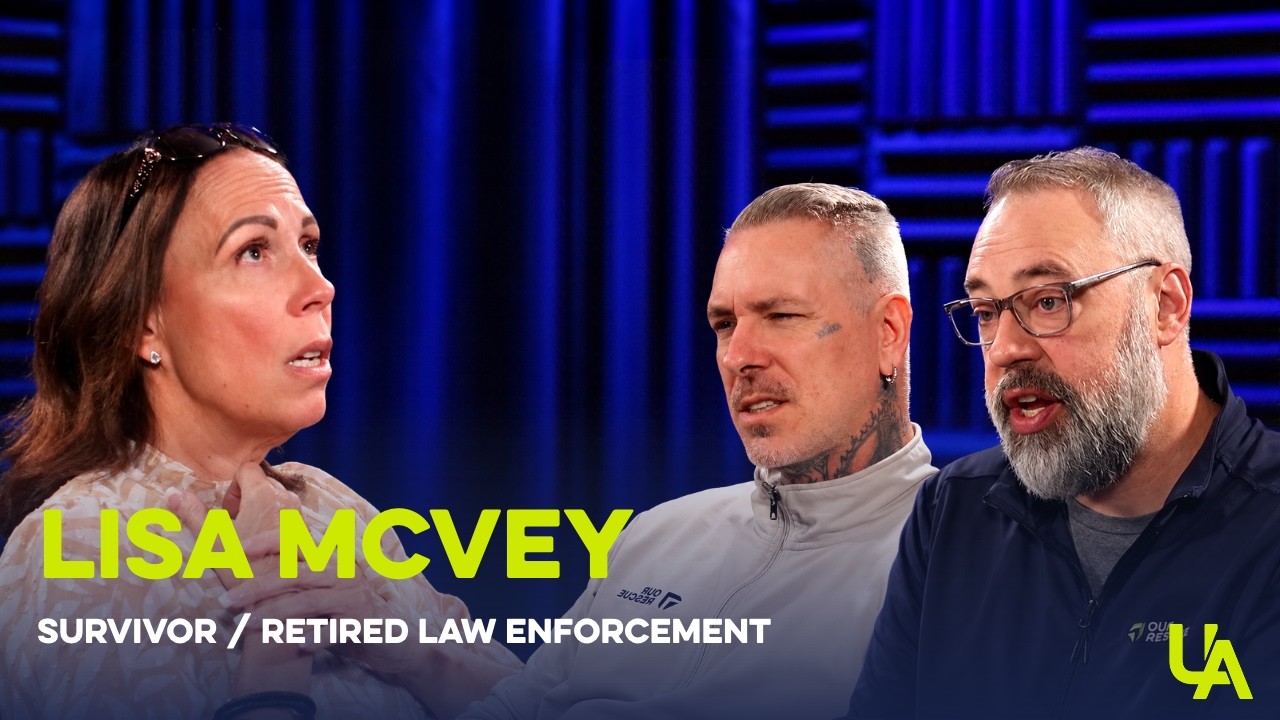
 Watch on YouTube

Your support helps equip the front lines and strengthen survivor care partners.
DONATE NOW